

My name is Tyler Brooks. I'm 35 years old.
I'm not a pro athlete. I'm not even elite. I work in marketing. I run because it keeps me sane, and I cycle because my knees told me to mix it up after my second marathon.
But I trained hard enough that, three summers ago, I learned something the hard way: most sunscreens aren't built for people who actually move.
And the ones labeled "sport"? They're mostly the same thing in a different tube. With a higher price tag.
I'll prove it to you.
My Story: How I Ended Up Here
Three years ago I was finishing a 22-mile long run in late July. Tempo around 7:50/mile. New Balance shoes. Camelbak. SPF 50 applied generously 15 minutes before I left the house — same routine I'd done a thousand times.
By mile 14, the sunscreen was in my eyes. By mile 18, my back was on fire and I couldn't tell if it was muscle soreness or sunburn. By the time I got home, I knew.
Second-degree sunburn across both shoulders, my neck, and the back of my arms. Blisters by Tuesday. Peeling by Friday. Couldn't sleep on my back for a week.
→ Skip to the formula that's quietly changing this for athletes
But the burn wasn't the worst part. The worst part was that I'd done everything right. I'd applied 15 minutes before. I'd used SPF 50. I'd reapplied — sort of, between miles 10 and 11, with what little I could squeeze out of the little tube in my hydration vest. And I still got cooked.
So I Started Over (And Found The Ugly Truth)
I went back to the actual ingredient labels.
Banana Boat Sport. Coppertone Sport. Neutrogena Beach Defense Sport.
Same chemical filters. Similar formulas. Similar percentages.
The biggest difference was the label.
That’s when I realized:
“Sport sunscreen” is mostly a marketing term.
The real question was not “sport vs. regular.” It was: what kind of sunscreen is actually sitting on your skin?
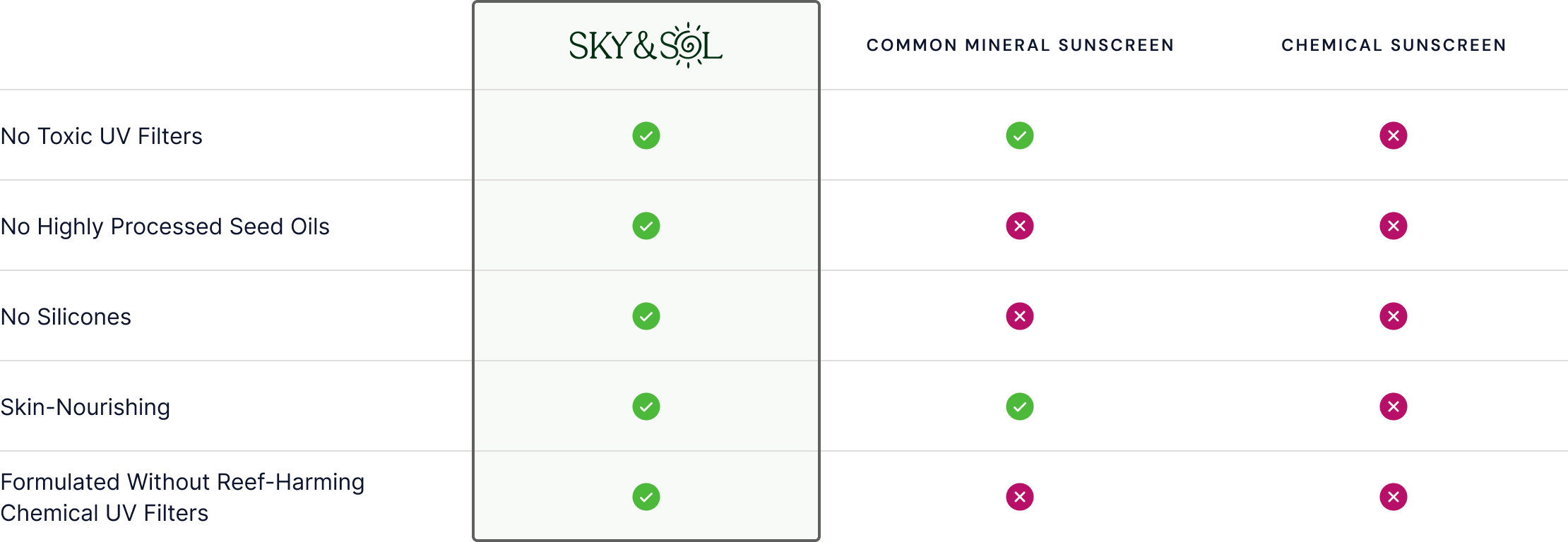
Chemical filters
Chemical filters absorb into the skin’s surface layers and convert UV rays into heat. They need time to activate and can wear down with sweat.
Mineral filters
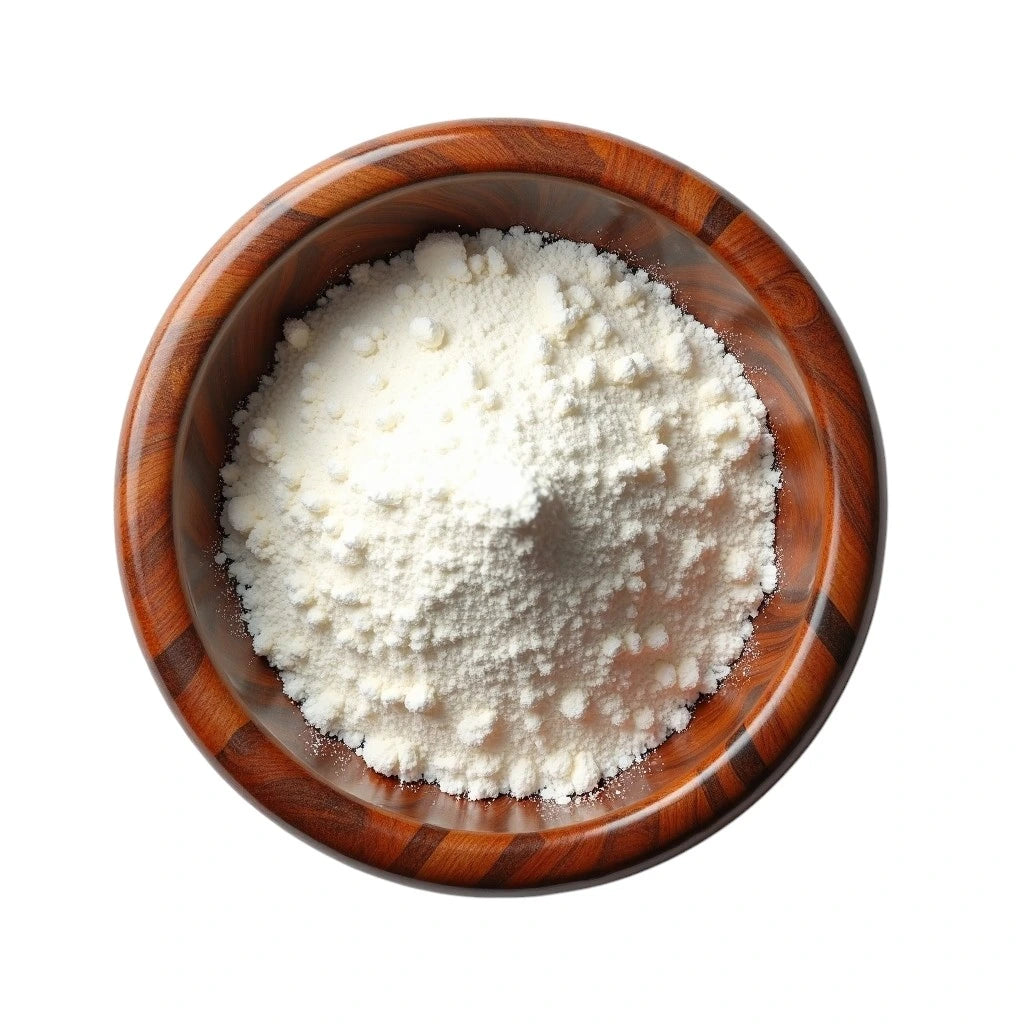
Mineral filters like zinc oxide sit on top of the skin like a physical shield, helping reflect and scatter UV rays at the surface.
That’s the difference that matters. Not “sport.”
Of The 27 I Tested, Here Are The Top 5:
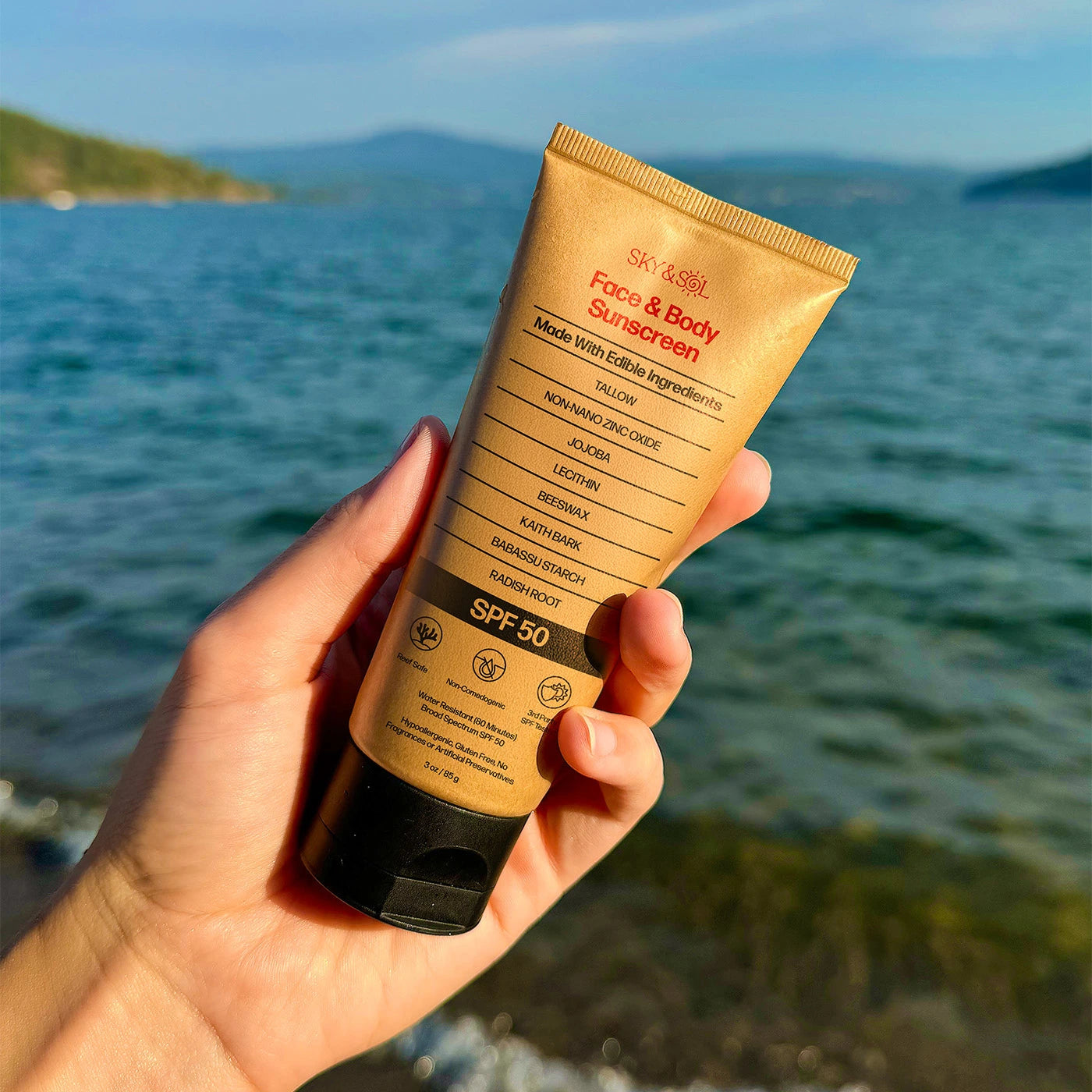
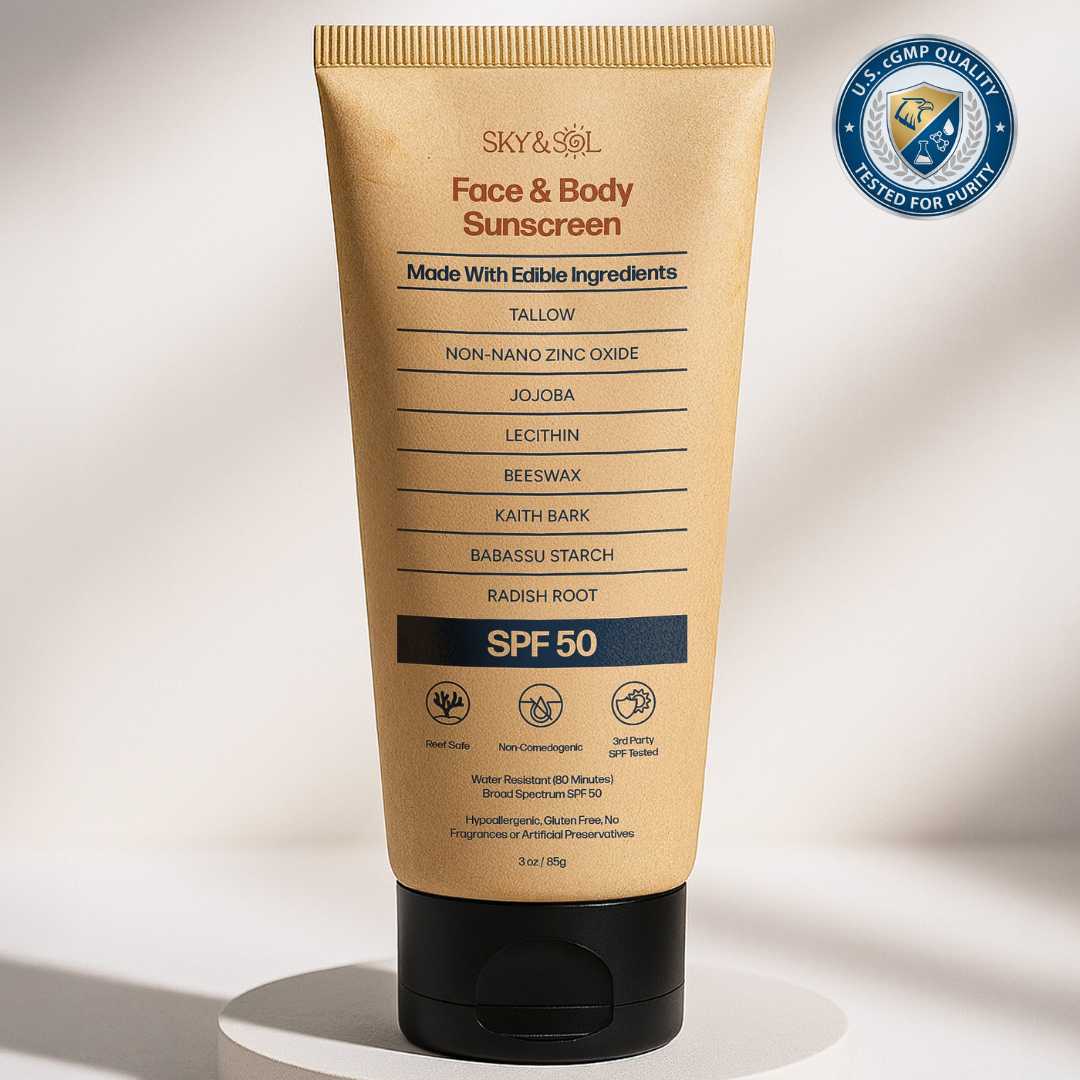
This is what I recommend to my training partners now. It's the only one I tested that hit all 8 criteria. Three months on it. No burns. Zero eye sting on long runs. Skin actually looks better than when I started.
- 25% Non-Nano Zinc Oxide — the highest concentration I've seen on a US shelf. FDA Category I active ingredient.
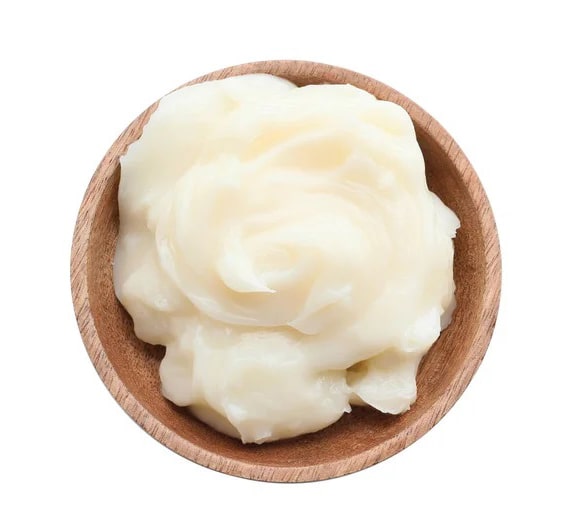
- Grass-Fed Tallow Formula — ~70% molecular similarity to skin's own lipids. Hydrating ingredients absorb while zinc stays at the surface.
- Anti-White Cast Tech™ — jojoba ester coating on the zinc particles prevents clumping. Over 92% of surveyed customers say it leaves less white residue than other mineral sunscreens.
- 80-Minute Water Resistance — FDA-tested maximum.
- Won't Sting Eyes — zinc-based, no chemical filters to dissolve in sweat.
- Non-Greasy Grip — stays matte. Pull-up bars, bike grips, kettlebells don't slip.
- 180-Day Money-Back Guarantee — even on used product. Strongest in the category.
- Made In USA — GMP-certified facility, tested for heavy metals.
- Formulated Without intentionally added parabens, phthalates, heavy metals, oxybenzone, octinoxate, or highly processed seed oils.
- Only available on their website. Not in stores yet.
- Sells out quickly. Grass-fed tallow is sourced from regenerative farms in Australia, and supply is limited by nature.
If Sky & Sol is out of stock, this would be my backup. It's one of the few "sport" labeled sunscreens that's actually mostly mineral.
- Zinc oxide + titanium dioxide (mostly Category I)
- 80-minute water resistance
- Widely available at major retailers
- Smart color-changing bottle (cool feature for kids)
- Significant white cast — looks chalky on most skin tones.
- Lower zinc concentration (around 10%) vs Sky & Sol's 25%.
- Slippery on equipment — affects grip on bars, handles, holds.
- Some variants combine mineral with chemical filters — read the actives carefully.
- No biomimetic hydration ingredients — feels dry after long sessions.
This was my go-to before I knew anything. I bought it 5 different times across 3 summers.
- Available everywhere
- Inexpensive ($8–$12)
- Water resistance rating
- Actives are avobenzone, homosalate, octisalate, octocrylene — all FDA Category III chemical filters.
- Burns eyes severely in sweat — my #1 complaint from training partners.
- Identical actives to the regular Banana Boat Ultra Sport — the "Performance" label changes nothing.
- Washes off in heavy sweat.
- Contains highly processed seed oils and synthetic fragrance.
- Widely available
- Heritage brand (82 years old)
- Inexpensive
- Actives: avobenzone, homosalate, octisalate, octocrylene — all FDA Category III.
- The same filters documented in the JAMA 2019 study as entering the bloodstream within 24 hours.
- The "Sport" version uses the same actives as their non-sport formulas.
- Stings eyes in sweat.
- Highly processed seed oils.
- Strong water resistance
- Available everywhere
- Dries quickly
- Contains avobenzone, homosalate, octisalate AND octocrylene — four chemical filters, all FDA Category III.
- Severely burns eyes in sweat — worst eye-sting of any I tested.
- Johnson & Johnson recalled multiple sunscreen products in 2021 after benzene was detected in some lots. Manufacturing has since been updated, but it's worth knowing.
- Strong synthetic fragrance.
The 8 Things I Now Look For (After Wasting $1,394)
After three summers of testing, here's the framework I now use when I look at a sunscreen tube. Steal it.
- 1FDA Category I Active IngredientDoes the "Drug Facts" label list only Zinc Oxide and/or Titanium Dioxide? If you see avobenzone, oxybenzone, octocrylene, octisalate, homosalate, or octinoxate — that's a chemical filter. Move on.
- 2Zinc ConcentrationMost "mineral" sunscreens use 5%–15% zinc oxide — the minimum. Higher (20%–25%) gives stronger surface protection. If it's under 20%, keep looking.
- 3Non-Nano vs. NanoNon-nano zinc particles are too big to penetrate pores; they stay on the surface. Nano blends better but the absorption science is less settled. For training, I wanted non-nano.
- 4Sweat-Resistant Without Burning EyesChemical sunscreens dissolved in sweat get carried into your eyes and sting. Zinc-based mineral formulas don't.
- 5Skin-Recognizable Hydrating IngredientsSome mineral sunscreens sit like a dry mask. Others use biologically-recognizable lipids your skin barrier already knows how to use.
- 680-Minute Water ResistanceThe highest water-resistance rating the FDA allows. It should be your floor for any athletic use.
- 7No Highly Processed Seed Oils Or Synthetic FragrancesThese oxidize on the skin, add irritation, and cause eye sting. Look for short ingredient lists.
- 8Money-Back GuaranteeMost offer 30 days. A 180-day guarantee — even on used product — is the strongest signal of confidence in this category.
What I Learned — Why 90% Of "Sport Sunscreens" Fail Athletes
After 27 sunscreens and $1,394, here's the brutal summary:
- The "Sport" label is unregulated.Brands can use it on any formula. There's no FDA standard to meet.
- Most "sport" formulas are identical to their regular versions.Same filters, same actives, different label, sometimes 30% more expensive.
- Chemical filters wash away in sweat by design.They sit partially inside the skin's surface — into your eyes, off your shoulders, down your back.
- The real question is mineral vs. chemical.Not sport vs. regular.
- Most mineral sunscreens have terrible white cast.The clumping of uncoated zinc particles is what creates the chalky look. The few that solve it use particle-coating tech like jojoba esters.
Don't Be This Athlete
You're training for a half marathon, a triathlon, a tournament, or just a really long bike day with friends. You grab whatever sunscreen is on your bathroom shelf. Spray it on liberally 15 minutes before you head out.
By mile 8 you're sweating into your eyes. By mile 15 your back feels hot. By the time you're done you have that tight, stinging feeling on your shoulders you've felt 50 times before. You shower. The hot water hits your back and you wince. You see the red in the mirror. You tell yourself you'll be more careful next time.
You won't. Because the sunscreen you're using isn't built for what you're doing.
I lived this for 10 years before I figured it out. I lost 3 summers and $1,394 figuring it out the hard way. You don't have to.
The Bigger Picture: This Isn't Just About Today's Burn
I want to be honest about something. The reason I now use a mineral sunscreen every day isn't just to avoid burns. It's because sun exposure isn't just about whether you burn today — it's cumulative. Every UV exposure session deposits damage that adds up over decades.
By the time I'm 50, 60, 70 — if I want to still be running, cycling, hiking with my kids — I want to be doing it with skin that hasn't been quietly degraded by 30 years of bad sunscreen. This isn't fear. This is investment.
The Sky & Sol formula helps support my skin barrier, helps protect against environmental stressors, and provides daily mineral protection while I do the things I love. That's a daily decision I can keep making for the next 30 years.
What Real Athletes Are Saying
"I've tried many mineral sunscreens but this one is by far the best. It actually rubs in and doesn't rub off. It stays put and doesn't run into your eyes when playing sports — great, long-lasting protection without the health risks of chemical sunscreens."
"I love Sky and Sol and recommended it to my entire pickleball team. It is the best — we wish Sky & Sol would be our pickleball sponsor because we all use it and love it!"
"This sunscreen is fantastic! When it's hot and other sunscreens melt into my eyes, I got bad burning all day. This gave us no burning eyes, was easy to rub in, and we didn't get burnt! And best thing, no chemicals!"
"Played multiple matches in direct sun and never felt eye sting or slippery hands. Definitely feels made for athletes."
"I have acne-prone skin and many sports sunscreens clog my pores. This one stayed breathable and didn't cause irritation."
"Applied before a long WOD in the sun and forgot I was wearing sunscreen. No greasy feeling on kettlebells or ropes."
Update: Sky & Sol Sports Is Currently Still In Stock
At the time of writing, you can get it at skyandsol.co. That's the only place that sells it. Right now they're offering the lowest price I've seen on the Sports formula.
Ever since this article came out, athletic teams and training groups have been buying in bulk. Word is spreading fast in the endurance community. They limit new orders each month to maintain quality — they want to keep using grass-fed tallow sourced from regenerative farms in Australia, and that supply is genuinely finite.
Click the button below and go all the way to checkout. The current offer will be applied automatically. No code required.
How To Get Yours
P.S. Or keep doing what you're doing.
Keep buying "sport" sunscreens that are just regular sunscreens in a different tube. Keep wincing when the hot shower hits your shoulders the night after a long ride. Keep wondering why you cycle through three or four different sunscreens every summer and never find one that works.
Or grab Sky & Sol Sports at the lowest price I've seen — before this batch sells out and they go back to full retail.
I tested 27 sunscreens. Only one passed all 8 of my tests. This is it.
Comments