
Health & Science Editorial
Updated February 2026
The Chemical Found in 98% of Pregnant Women's Blood —
And What It May Be Doing to Their Children's Brains
A new study reveals that "forever chemicals" detected during pregnancy may be reshaping children's brain structure by age 5. Here's what the science says — and the one daily habit you can change right now.
See the Sunscreen 200,000+ Parents Already Trust


By Rosalind Shaw

5 Minutes Read

In October 2025, researchers from the University of Turku (Finland) and Örebro University (Sweden) published a landmark study in The Lancet Planetary Health that sent shockwaves through the medical community.
The study — part of the FinnBrain Birth Cohort — followed pregnant women and their children for five years. Using advanced MRI imaging, the team discovered something alarming: mothers with higher levels of PFAS in their blood during pregnancy had children with measurable structural differences in their brains by age 5.
These weren't subtle statistical blips. The changes appeared in brain regions responsible for:

Vision and spatial processing (the occipital lobe)

Hormonal regulation (the hypothalamus)

Communication between brain hemispheres (the corpus callosum)

Early learning, balance, and information processing
Senior Researcher Aaron Barron, one of the study's lead authors, put it plainly:
"Humans consume PFAS from drinking water, food, or in some cases exposure through occupation. They are ubiquitous in our blood, and our bodies do not break them down."
The study measured seven distinct PFAS compounds in maternal blood samples taken during the second trimester. What they found was a dose-dependent relationship: the higher the mother's PFAS burden, the more pronounced the brain changes in her child.
Professor Tuulia Hyötyläinen from Örebro University added a critical detail:
"We found that individual compounds had specific associations with offspring brain structure... In most cases, the carboxylate-containing PFAS were the ones more strongly associated with brain outcomes."
This wasn't an isolated finding. The FinnBrain results align with earlier research — including Project Viva (a U.S.-based cohort) which linked prenatal PFAS to reduced visual-motor abilities, and the Shanghai-Minhang Birth Cohort which found communication difficulties and impaired social skills in children exposed to PFAS mixtures before birth.
"Forever Chemicals" — And Why They're Everywhere
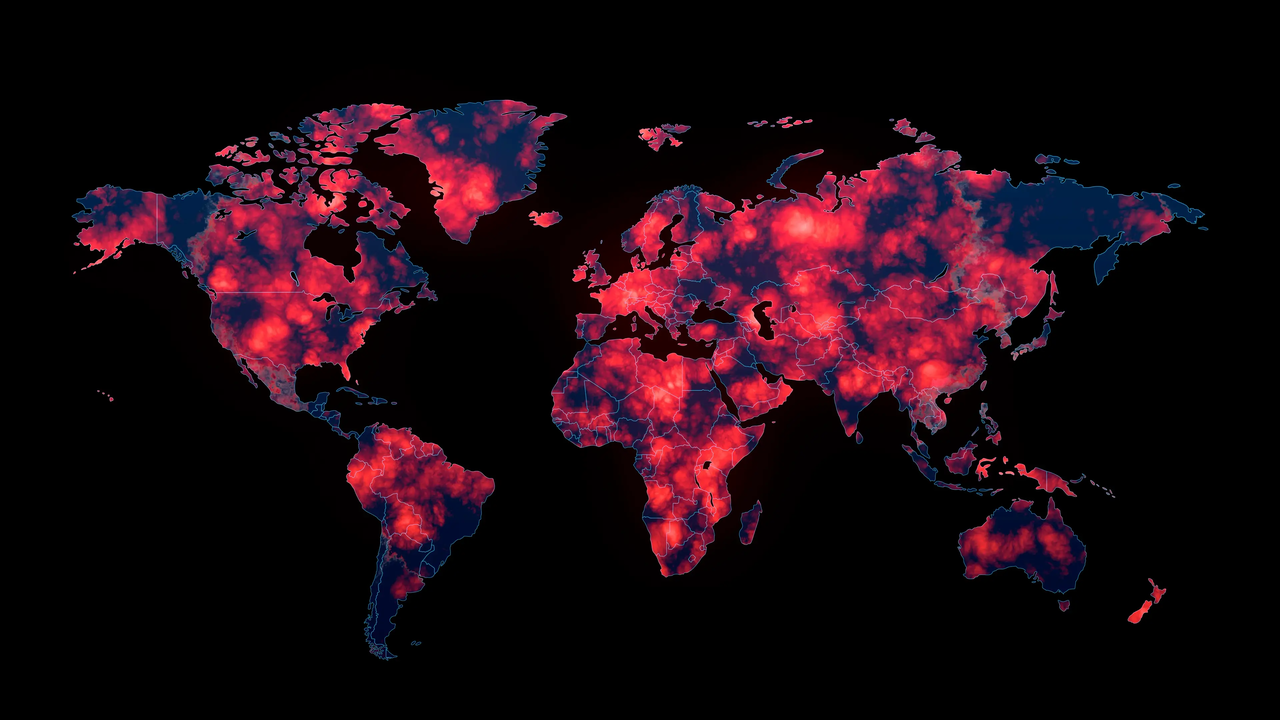
PFAS (per- and polyfluoroalkyl substances) are built around one of the strongest bonds in organic chemistry: the carbon-fluorine bond. They don't break down in the environment. They don't break down in your body. Once they're in your bloodstream, they stay there — for years.
PFOS: half-life of 3.4 to 5.4 years in the body
PFOA: lingers for 2.3 to 8 years
PFHxS: persists for 5.3 to 8.5 years
(Source: Occupational & Environmental Medicine, 2018)
That means a woman's exposure from a decade before conception can still contribute to her baby's chemical burden during pregnancy. And according to CDC/NHANES data, 97-99% of Americans already have detectable PFAS in their blood.
The exposure sources are everywhere. The U.S. Geological Survey estimates 45% of American tap water contains PFAS. The FDA's 2024 Total Diet Study found PFAS in 7% of food samples. And the FDA's 2025 analysis identified 51 PFAS compounds across 1,744 cosmetic products — including some of the personal care products people apply to their skin every single day.
FDA Commissioner Marty Makary acknowledged the gap in a 2025 report:
"Toxicological data for most PFAS are incomplete... leaving significant uncertainty about consumer safety."
You can't control your water supply. You can't control every food source. But there's one daily source of chemical exposure you absolutely can control.
The Sunscreen Problem Nobody Talks About
In 2019 and 2020, the FDA's own Center for Drug Evaluation and Research conducted a clinical trial that changed what we know about sunscreen. Published in JAMA (Matta et al.), it was the first rigorous study to test whether common sunscreen chemicals are absorbed into the bloodstream.
They are. After just a single application.
Six widely used chemical UV filters were tested: Avobenzone, Oxybenzone, Octocrylene, Homosalate, Octisalate, and Octinoxate. Every single one exceeded the FDA's safety threshold of 0.5 ng/mL — some by staggering margins:
Oxybenzone reached concentrations above 100 ng/mL — more than 200 times the safety threshold
These chemicals remained detectable in the bloodstream up to 21 days after the last application
Dr. Janet Woodcock, then Director of the FDA's CDER, stated:
"This finding calls for further industry testing to determine the safety and effect of systemic exposure of sunscreen ingredients, especially with chronic use."
In response, the FDA categorized sunscreen ingredients into three tiers:
FDA Category
Category I — GRASE
Category II
Category III
Status
Safe & Effective
Not Safe
Insufficient Data
What It Means
Only 2 ingredients qualified: Zinc Oxide and Titanium Dioxide
Banned (PABA, Trolamine Salicylate)
12 ingredients lack adequate safety data — including the 6 tested in the JAMA study
12 of the 16 active sunscreen ingredients on the U.S. market are in regulatory limbo. Manufacturers have been asked to prove they're safe. That data has not been provided.
And here's the connection: Oxybenzone — the chemical that exceeded safety thresholds by the widest margin — has been detected in breast milk, amniotic fluid, and placental tissue. It crosses the same barrier that PFAS crosses. Hawaii banned it in 2018 for environmental damage. The human health data suggests the concern extends far beyond coral reefs.
David Andrews, Senior Scientist at the Environmental Working Group, was direct:
"What is most alarming is that chemicals are absorbing into the body in significant amounts and the ingredients have not been fully tested for safety."
One Simple Change: The Mineral Difference
Mineral sunscreens work fundamentally differently. Chemical filters penetrate your skin, absorb UV radiation, and convert it to heat — that's how they end up in your bloodstream. Mineral filters sit on top of your skin as a physical barrier, reflecting and scattering UV rays before they reach your cells.
They don't absorb.
They don't accumulate. They shield.
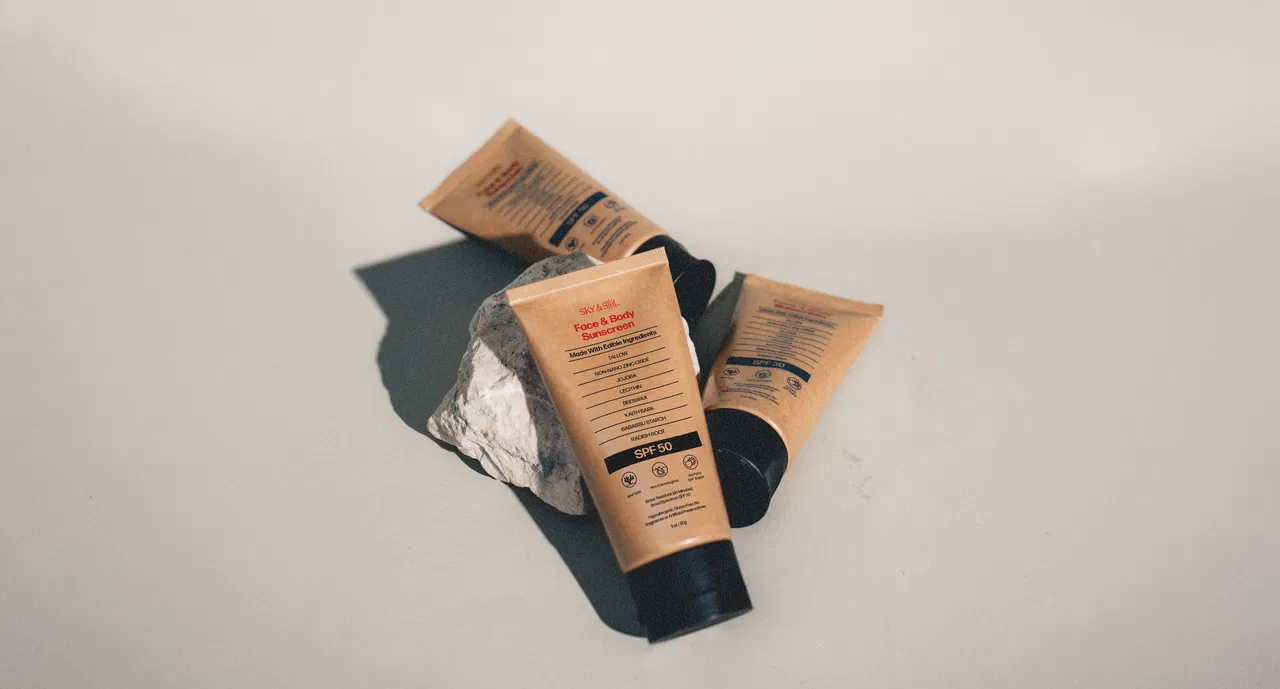
Sky & Sol Face & Body Sunscreen SPF 50 was built on this principle — and it goes further. Instead of filling the formula with synthetic fillers and processed oils, Sky & Sol starts with ingredients your skin may actually recognize:
✅ Non-Nano Zinc Oxide — One of only two FDA GRASE-approved sunscreen actives. The non-nano particles (>100nm) are too large to penetrate your skin's outer layer. They provide broad-spectrum UVA and UVB protection without entering the bloodstream. Both ACOG and the AAD recommend mineral sunscreens for pregnant women.
✅ 100% Grass-Fed Tallow — Most mineral sunscreens replace chemical UV filters but still rely on synthetic moisturizers and processed oils in the base. Sky & Sol uses grass-fed beef tallow — an ingredient with a fatty acid profile that shares approximately a 50-55% molecular match with human sebum, compared to ~15% for jojoba oil and ~8-10% for coconut oil. A 2024 scoping review in the medical journal Cureus found tallow to be highly biocompatible, with efficacy in supporting the skin barrier and no significant adverse effects.
✅ Radish Root Ferment Filtrate — A natural antimicrobial preservative derived from fermented radish roots. Lab tests show it reduces harmful bacteria by over 90% within hours — comparable to synthetic preservatives, without the synthetic chemistry.
Formulated without: Chemical UV filters, highly processed seed oils, silicones, added fragrances, and intentionally added parabens, phthalates, or heavy metals. Formulated without reef-harming UV filters banned in Hawaii.
Full ingredient list: 100% Grass-Fed/Grass-Finished Tallow, Non-Nano Zinc Oxide, Distilled Water, Cold-Pressed Jojoba, Sunflower Lecithin, Kaolin Clay, Babassu Starch, Beeswax, Radish Root Ferment Filtrate, Astaxanthin.
How It Compares
Chemical UV Filters
Highly Processed Seed Oils
Silicones
Supports Skin Barrier
FDA GRASE Active
Broad Spectrum (UVA + UVB)
Sky & Sol SPF 50

None
None
None
Grass-fed tallow base
Non-Nano Zinc Oxide
None
Common Mineral Sunscreens
May contain some
Often present
Often present
Varies
Usually
Usually
Common Chemical Sunscreens

Primary active
Common filler
Common
May compromise barrier
Category III
Varies by filter
Choose Your Shield — Check Availability →
What 200,000+ Customers Are Saying



Join 200,000+ Families Who Made the Switch →
Sky & Sol holds a 4.53 out of 5 star rating from over 3,700 verified reviews.

"I switched when I was pregnant and never looked back. No weird chemicals, no white cast, and my skin actually feels better after wearing it all day."
"We use it on the whole family — including our toddler. It goes on smooth and doesn't irritate his sensitive skin."
"I spent months researching sunscreens after reading about chemical absorption. This is the only one where I can actually read and understand every single ingredient."
The Sky & Sol Promise



180-Day Money-Back Guarantee

180-Day Money-Back Guarantee
Free Shipping on qualifying orders
HSA/FSA Eligible
3-5 Day Delivery
Frequently Asked Questions
Sky & Sol uses Non-Nano Zinc Oxide — one of only two sunscreen actives classified as GRASE by the FDA. Both ACOG and the AAD recommend mineral sunscreens for use during pregnancy to help avoid chemical UV filter absorption.
Sky & Sol uses a jojoba ester coating technology designed to reduce visible white residue. 92% of surveyed customers reported less white cast compared to other mineral sunscreens.
Sky & Sol follows the SkyCertified™ Edible-Grade Standard*, which means the formula prioritizes ingredients derived from food-grade sources. *Follows our SkyCertified™ Edible-Grade Standard.
Yes, for ages 6 months and up. The mineral-only formula and absence of added fragrances and common irritants make it well-tolerated for sensitive skin.
One 3 oz tube provides ~60-80 full face applications or ~25-35 upper body applications. For a family of 3-4 using on weekends, a tube typically lasts 3-6 weeks.
Small Choices Add Up


The research is clear: PFAS stay in the body for years. Chemical UV filters enter the bloodstream within hours. You can't control every source of exposure — but you can control what you choose to apply to your skin and your family's skin, every day.
Sky & Sol Face & Body Sunscreen SPF 50 offers broad-spectrum mineral protection with ingredients your skin may actually recognize. No chemical UV filters. No highly processed seed oils. No synthetic preservatives. Just a physical shield that stays on the surface — where sunscreen belongs.
Protect Your Family — Try Sky & Sol Risk-Free →