
Best Sunscreen for Rosacea: Sky & Sol Buyer Guide
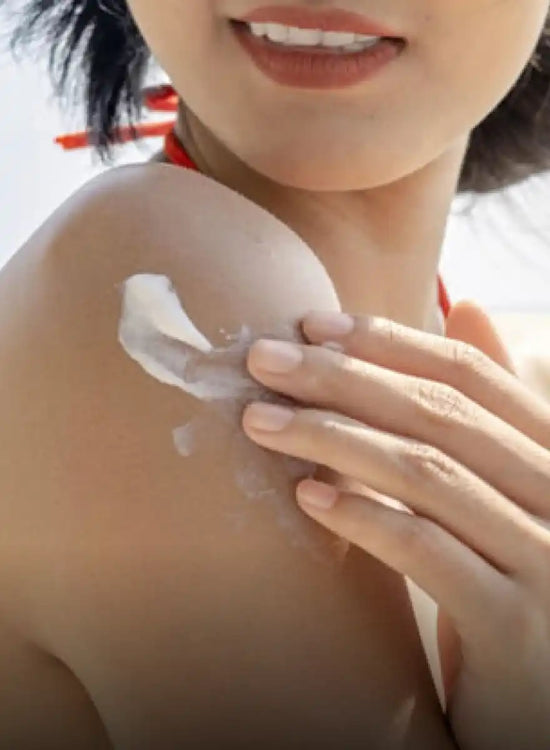
You put on sunscreen to protect your skin, then watch your cheeks flush, sting, or turn a deeper shade of red within minutes. For anyone with rosacea, that reaction is familiar and maddening. The product meant to help ends up setting off the exact flare you were trying to avoid, and it teaches you to dread the one habit dermatologists say matters most.
Skipping sunscreen only trades one problem for a worse one. The answer is choosing the right kind. The best sunscreen for rosacea is gentle mineral protection with a short, clean ingredient list, and this guide names the picks worth trying and shows you how to judge any formula on your own.


Why Sky & Sol's Clean Formula Suits Reactive Skin
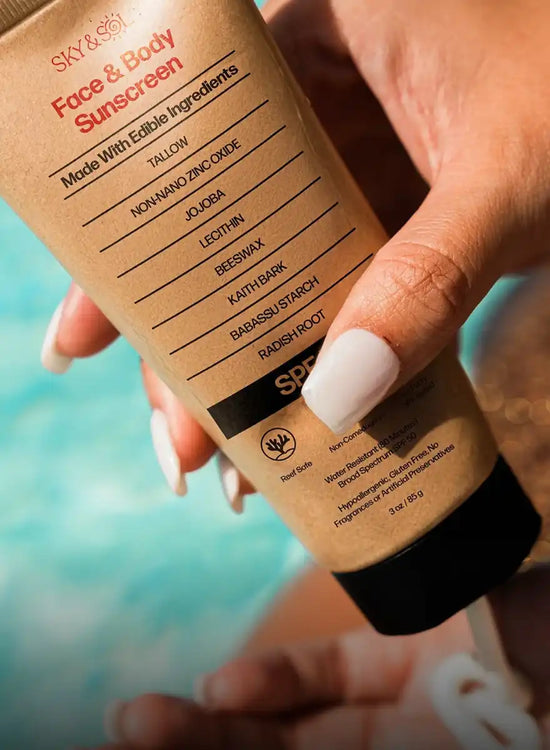
The formula is six ingredients, and each one earns its place:

Non-nano zinc oxide coated in jojoba ester: the mineral filter that reflects UV instead of absorbing it, sized to blend in clear.

Jojoba oil: a light moisturizer that closely mirrors the skin's own oils.

Beeswax: a natural sealant that locks in moisture and helps the sunscreen stay put through sweat and water.

Propolis: a bee-derived ingredient long valued for its soothing quality.

Grass-fed tallow: rich, barrier-friendly moisture for skin that feels stripped during a flare.
Tallow is worth a closer look. Its fat profile is close to the skin's own chemistry, which is part of why it feels supportive instead of heavy on reactive skin. Founder Max Medroso built Sky & Sol around a natural-living approach, and the result is a natural sunscreen for rosacea made with a short list of trusted ingredients, tested for purity. Free from fragrance, preservatives, and parabens, it gives reactive skin fewer reasons to react.
Trying a new sunscreen always carries a little risk when your skin reacts easily. We back every order with a 180-day, 100% satisfaction guarantee, so finding out whether it works for your skin costs nothing but a little time. Given how often reactive skin rejects a formula, that kind of promise is worth more than it looks.
3 Other Sunscreens Worth Considering for Rosacea
If Sky & Sol is not the right fit, a few other mineral, fragrance-free options meet the same standard. Each one is zinc or titanium based and built with sensitive skin in mind. We are comparing on features here, not steering you toward a checkout.


What to Look for in a Rosacea-Friendly Sunscreen-Greasy Formulas
Non-comedogenic means the formula is not likely to clog pores. For anyone shopping for a non-greasy sunscreen for oilyThe best sunscreen for rosacea is a mineral sunscreen built on zinc oxide or titanium dioxide, fragrance-free, broad spectrum, and SPF 30 or higher. Look for the shortest ingredient list you can find, because fewer additives mean fewer potential triggers for reactive, flush-prone skin.
This is not just our opinion. The National Rosacea Society recommends a non-chemical sunscreen for rosacea, built on zinc oxide or titanium dioxide at SPF 30 or higher, and the American Academy of Dermatology gives the same advice for sensitive, rosacea-prone skin. Three criteria do most of the work. skin, that label carries real weight. It is the difference between a clear morning routine and a fresh crop of clogged pores by Friday. The American Academy of Dermatology recommends looking for the word "non-comedogenic" on the label along with broad-spectrum SPF 30 or higher.
Texture matters as much as the label. Lightweight, fast-absorbing formulas beat heavy occlusives on oily skin. Anything that sits like a mask ends up mixing with your natural oil and turning shiny within an hour.
One quick warning. "Oil-free" and "non-greasy" are not the same claim. Plenty of oil-free sunscreens rely on silicones that feel plasticky, seal in the day's oil, and leave you shinier than when you started. If you want a sunscreen for oily skin that doesn't feel greasy, read past the front of the label.
Sky & Sol Sunscreens for Rosacea-Prone Skin
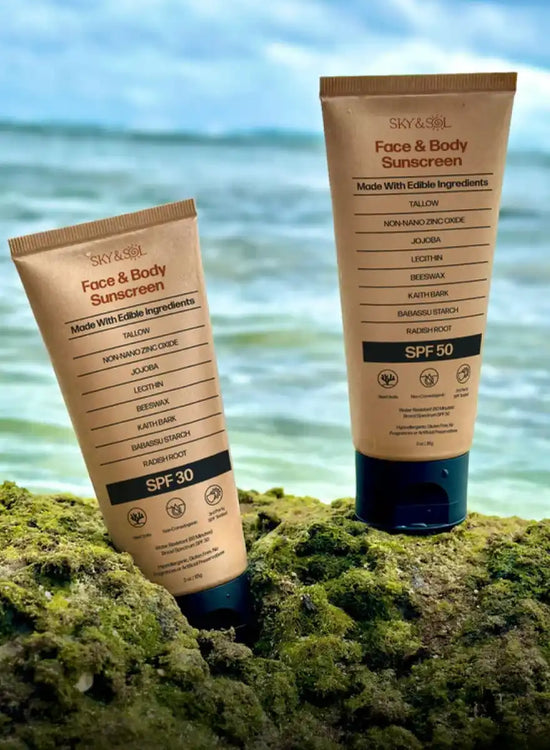
Sky & Sol was built to be the best sunscreen for rosacea-prone skin. Every formula uses non-nano zinc oxide, zero chemical filters, no fragrance, and a six-ingredient recipe you can actually pronounce. That checks every box above without asking you to gamble on hidden irritants.
For anyone shopping for a sunscreen for sensitive skin and rosacea, that certainty is the real benefit. Instead of squinting at a label full of unfamiliar chemicals and hoping for the best, you know exactly what is going on your face and why each ingredient is there.
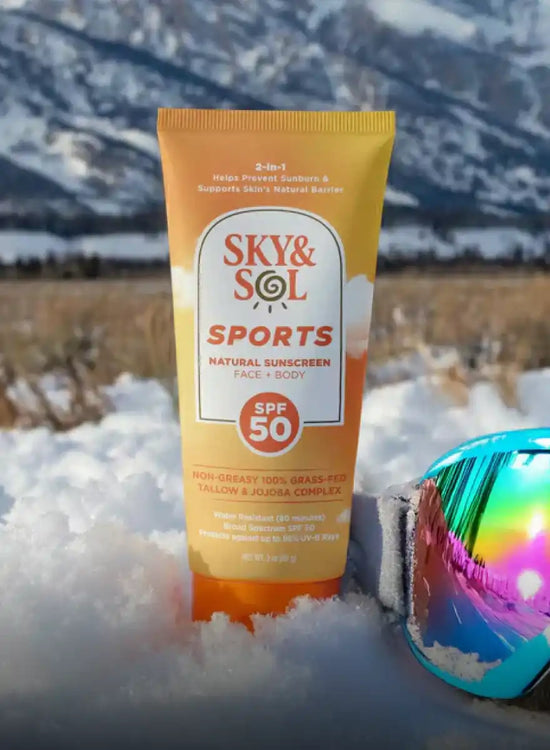
Every option in the range is Broad Spectrum Certified, third-party SPF tested, and free from fragrance, preservatives, and parabens. That combination is genuinely rare, and it is what lets reactive skin get real protection without the usual trade-offs. You are getting coverage you can verify, not just marketing language.
Why the Wrong Sunscreen Triggers Rosacea Flare-Ups
Sun exposure is one of the most common rosacea triggers, and the research backs that up. A peer-reviewed review on ultraviolet radiation and rosacea found that UV exposure is the single most important environmental factor linked to the condition, activating the inflammation and visible blood vessels that make skin look flushed. Daily protection is not optional for reactive skin.
But the type of protection matters just as much as the habit. Chemical UV filters work by absorbing sunlight and converting it into heat before releasing it from the skin. Heat is its own well-known rosacea trigger, so a chemical sunscreen can quietly add to the problem while it blocks UV. That is the frustrating loop many people get stuck in, and it is why finding a sunscreen that won't trigger rosacea starts with the filter type.
Formula plays a role beyond the filter too. Fragrance and alcohol are documented irritants for sensitive skin, and both hide in plenty of mainstream sunscreens. When a product stings on contact, most people stop using it, which leaves skin exposed to the very UV that drives flare-ups. That is why the ingredient list deserves as much attention as the SPF number on the front of the bottle.
This mistake carries a compounding cost. Every flare feeds the inflammation and visible vessels that the same research ties to long-term UV exposure, so a sunscreen that triggers you is never a neutral choice. Protecting reactive skin today is what keeps redness from slowly becoming your everyday baseline, and consistent protection is one of the few rosacea habits fully in your control.
Choose Mineral Filters Over Chemical Filters
Mineral filters like zinc oxide and titanium dioxide sit on top of the skin and reflect UV light away, almost like a mirror. They do not absorb light or convert it to heat, so they skip the warming effect that chemical filters create. For skin that flushes at the first hint of heat, that difference is the entire point. You get broad protection without feeding the trigger you are trying to manage. A zinc oxide sunscreen for rosacea gives you that reflective barrier without the sting a chemical filter can bring.
If your skin is especially reactive, titanium dioxide tends to be the gentlest filter of the two, and many formulas pair it with zinc oxide for fuller coverage. Since mineral filters sit on the surface and never enter the skin, they are also a safer bet when your barrier already feels raw.
Go Fragrance-Free With a Short Ingredient List
Fragrance is one of the most common culprits behind stinging and redness, and it hides under names like parfum and essential oil blends. Alcohol and long lists of botanical extracts raise the odds of a reaction too. Keep in mind that unscented is not the same as fragrance-free, since unscented products can still contain masking fragrance. When you scan a label, aim for the cleanest, shortest ingredient list possible, and treat a fragrance-free sunscreen for rosacea as the baseline, not a bonus. Fewer ingredients mean fewer chances for something to set off your skin. A truly short list runs about six ingredients, which is the exact standard Sky & Sol built its sunscreens on.
One habit worth adopting is a patch test. Try any new sunscreen on your jaw or inner arm for two or three days before you put it all over your face. It is a small step that can save you from a full-face flare.
Aim for SPF 30 or Higher, Broad Spectrum
A broad spectrum sunscreen for rosacea guards against both UVA and UVB rays. UVA drives aging and the visible vessels that rosacea makes worse. UVB is what burns you. SPF 30 or higher is the daily standard for reactive skin. If you spend time outdoors, look for water resistance and pick a formula that stays effective for up to 80 minutes in water or sweat. Consistent daily use beats an occasional high-SPF application, so the best sunscreen is the one comfortable enough that you actually wear it every day.
Consider a Tinted Formula to Offset Redness
A tinted mineral sunscreen for rosacea adds a second benefit for redness-prone skin. The iron oxides that create the tint help neutralize the look of redness, so your skin reads more even the moment you smooth it on. Tint also cancels out any faint white cast, which makes it an easy win when visible redness is your main concern. Just confirm it is still a gentle sunscreen for facial redness, fragrance-free and mineral based, before you commit.
How to Apply Sunscreen When You Have Rosacea
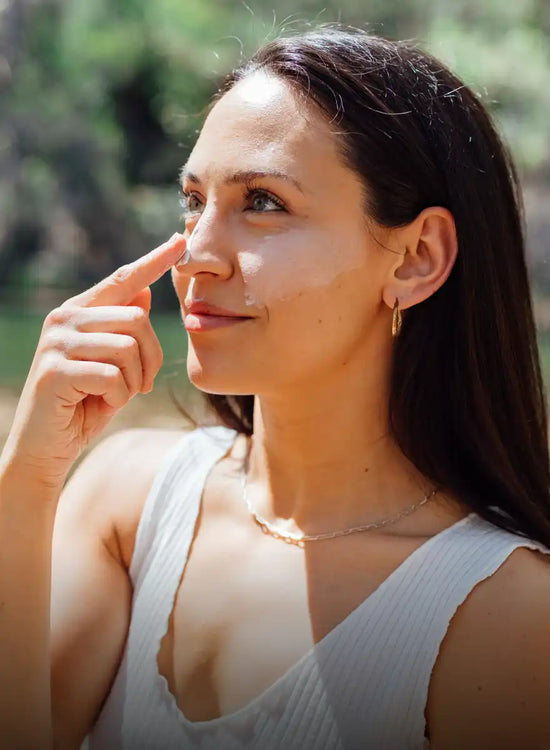
Apply sunscreen as the last step in your skincare routine, every day, rain or shine. Use about a quarter teaspoon for your face to get the protection the SPF promises. When you are outdoors, reapply every two hours to keep that coverage intact.
Technique matters for reactive skin. Pat or press the sunscreen in gently instead of rubbing hard, since friction can trigger redness on its own. Let it settle for a minute before makeup, and layer it over a gentle moisturizer if your skin runs dry during a flare. Small habits like these keep application from becoming a trigger of its own.
Reapplying midday over makeup can feel tricky, but you have options. A mineral powder sunscreen or an SPF setting spray lets you top up protection without disturbing your base or rubbing at your skin. For the body, use enough to coat each area generously, since thin layers quietly cut the actual SPF you get.
Frequently Asked Questions About Non-Toxic Sunscreen
Does sunscreen help rosacea?
Yes. Daily broad-spectrum protection helps limit the UV exposure that drives flare-ups, and sun is one of the most reported rosacea triggers. Sunscreen does not cure rosacea, but it supports calmer, more stable skin by removing a major trigger from your day.
Is mineral or chemical sunscreen better for rosacea?
Mineral is generally the better choice for reactive skin. It reflects UV light rather than absorbing it and converting it to heat, so it avoids the warming effect and irritation risk that chemical filters can bring. That is why most guidance for rosacea points to zinc oxide or titanium dioxide.
What sunscreen ingredients should you avoid with rosacea?
Steer clear of chemical UV filters like oxybenzone, avobenzone, and octocrylene. Fragrance, alcohol, menthol, and witch hazel are also common irritants for rosacea-prone skin. When in doubt, choose the shortest ingredient list you can find.
Will mineral sunscreen leave a white cast?
It can, especially with older or heavier formulas. Sunscreens made with non-nano zinc oxide that is coated to rub in clear, like Sky & Sol's, keep the cast to a minimum. In practice, you smooth it on and watch the white disappear.
Protect Reactive Skin Without the Guesswork
The best sunscreen for rosacea is not complicated. Gentle mineral protection, fragrance-free, broad spectrum, SPF 30 or higher, and a short ingredient list will cover you without the sting.
If you want a pick that checks every box, start with the Sky & Sol SPF 50 Mineral Face & Body Sunscreen. Try it on your own skin, and if it does not feel right, the 180-day, 100% satisfaction guarantee means you can return it even after using it. Clean ingredients and third-party testing let you protect your skin and finally stop guessing about what is in the bottle.