
Best Non-Toxic Sunscreens: What to Look for and What to Skip



The best non-toxic sunscreen uses mineral filters like non-nano zinc oxide instead of chemical UV absorbers, skips fragrance and synthetic preservatives, and reads like an ingredient list you can actually pronounce. You are in the right place if you have been turning over sunscreen tubes in the pharmacy aisle hoping to find one you can trust on your skin.
This roundup keeps things simple. Every product below comes from Sky and Sol, a small-batch brand built around a six-ingredient mineral formula for face, body, and lips. Same clean base, three SPF and use-case options, plus a tallow lip balm to round out a full sun routine.
The Best Non-Toxic Sunscreens (All from Sky and Sol)
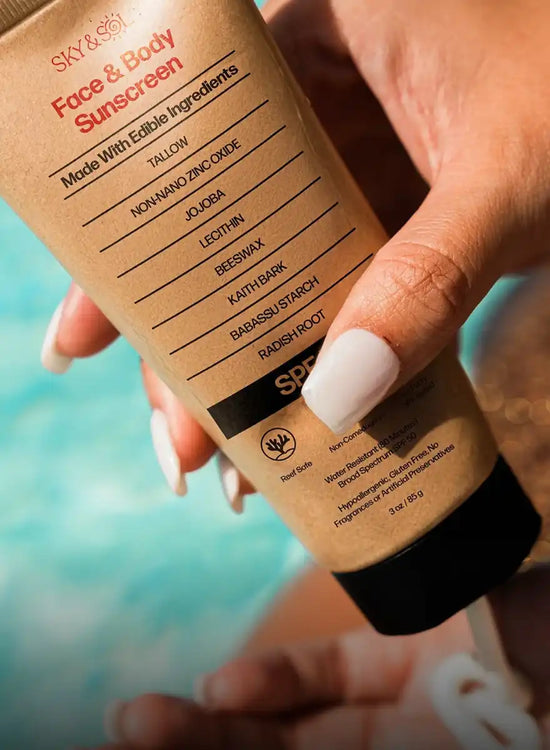
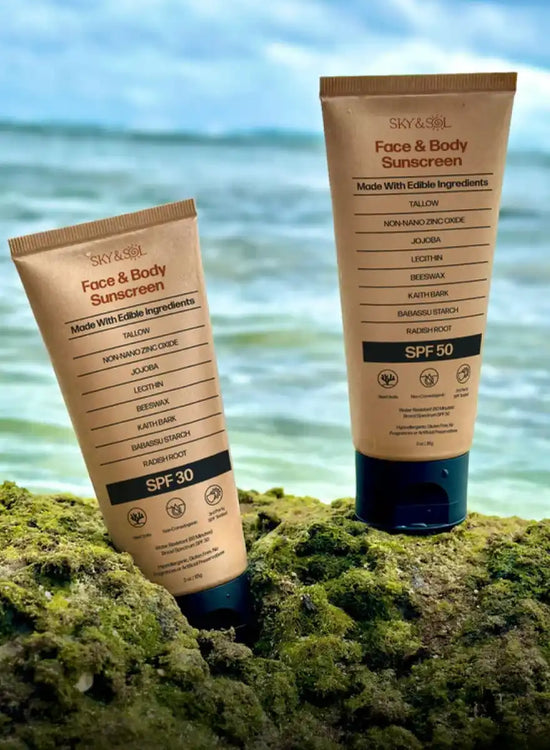
We are recommending one brand across every use case for a reason. Sky and Sol's lineup runs on the same six ingredients across every product, non-nano zinc oxide coated in jojoba ester, jojoba oil, beeswax, propolis, and grass-fed tallow. Every product is third-party SPF tested, Broad Spectrum Certified, and backed by a 180-day, 100% satisfaction guarantee.
The formulas are cold-processed, batch-tested, and built around sustainably sourced ingredients. No fragrance, no parabens, no synthetic preservatives. Every product in the lineup is non-greasy and built around the same anti-white-cast technology, so you can wear it without looking chalky.
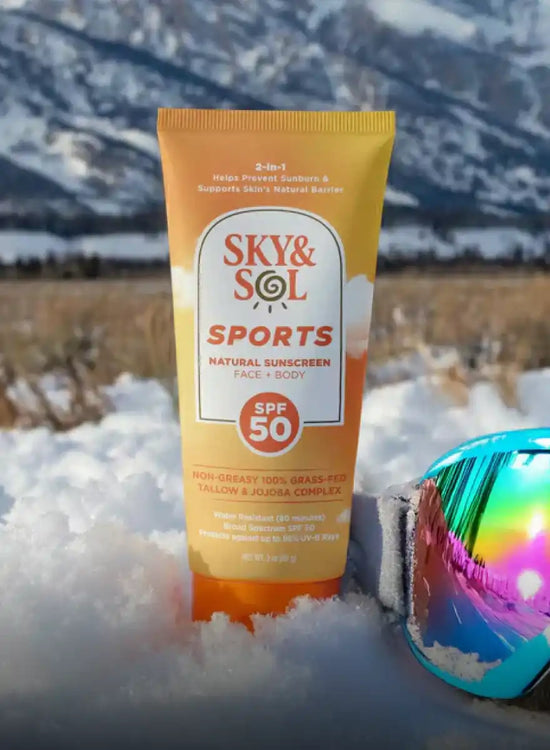
Three SPF sunscreens for different use cases, plus one tallow lip balm to round out a full routine. Each one earns a slot on this list as the best non toxic sunscreen for adults building a clean sun routine from face to body.


What "Non-Toxic Sunscreen" Actually Means
In plain language, a non-toxic sunscreen (sometimes called a safer sunscreen) protects your skin from UVA and UVB rays without the chemical UV filters, fragrances, parabens, and synthetic preservatives found in conventional formulas. Instead, it relies on mineral filters, most commonly non-nano zinc oxide, that sit on top of the skin and bounce UV rays away.
"Non-toxic" is not an FDA-regulated label. That is the catch. Brands can stamp it on a tube without meeting a specific standard, which is why the ingredient list matters more than the marketing on the front of the bottle.
The shortcut is simple. Flip the tube over before you buy. If the active ingredient is zinc oxide or titanium dioxide and the rest of the list reads like recognizable plant oils, waxes, and a preservative or two, you are in safer territory.
Ingredients to Skip in Conventional Sunscreens
Most chemical sunscreens rely on a small set of UV-absorbing compounds that clean-beauty shoppers have been side-eyeing for years. The names worth knowing are oxybenzone, octinoxate, avobenzone, homosalate, octisalate, and octocrylene. These work by absorbing UV rays inside the skin instead of blocking them at the surface.
The concern is twofold. Shoppers raise questions about hormone disruption, absorption into the bloodstream, and impact on coral reefs and marine life. The FDA's proposed sunscreen rule on Generally Recognized as Safe and Effective status classified only two active sunscreen ingredients, zinc oxide and titanium dioxide, as Generally Recognized as Safe and Effective. Every other commonly used filter was sent back for more safety data.
Beyond the active ingredients, watch for added fragrance, parabens, and synthetic preservatives. Fragrance is a frequent skin irritant and a catch-all term that can hide dozens of unlisted chemicals. Parabens are flagged for potential endocrine effects. Synthetic preservatives often appear under chemistry names most shoppers will not recognize.
A short list of clean sunscreen ingredients signals more than style. It tells you the formula has fewer points of failure, which is what makes non toxic sunscreen ingredients worth the label.
What to Look for in a Truly Clean Formula
Five things are worth scanning for on a label:

Non-nano zinc oxide as the active ingredient, the marker of any credible zinc oxide sunscreen, ideally coated for easier blending
An ingredient list short enough to read in one breath
No added fragrance or synthetic preservatives
Broad-spectrum certification
Third-party SPF testing that confirms the SPF rating holds up under lab conditions
These markers separate a credible mineral sunscreen for face and body from a tube full of marketing. Only about 30% of people understand broad-spectrum protection, according to the Skin Cancer Foundation. The label matters here. SPF measures UVB defense. Broad-spectrum tells you the formula covers UVA too, the rays most associated with premature aging.
One more marker worth flagging. The cleanest formulas now lean on tallow, an ancestral skin ingredient that mirrors the lipid profile of human skin. For now, treat it as a quiet quality signal.
"Clean" does not mean weak. A Broad Spectrum Certified mineral sunscreen meets the same SPF protection standards as a chemical formula when applied correctly. The protection is real. The ingredient list is shorter.
Why a Tallow-Based Mineral Sunscreen Stands Out
Most mineral sunscreens use the same active filter, but the carrier the brand mixes it into is what makes or breaks the wear. Sky and Sol's choice is grass-fed tallow.
Tallow mirrors the lipid profile of human skin more closely than most plant oils. That means it sinks in instead of sitting on top of the skin like a paste, which is the texture problem most mineral sunscreens have not solved. Pair that with non-nano zinc oxide coated in jojoba ester, and you get a tallow sunscreen that rubs in clear and feels like skincare. The same carrier philosophy shows up across the broader tallow skincare lineup the brand has built around it.
Tallow has been used as a skin nourisher for centuries, long before "skincare" was a category. The current revival is more of a return than a discovery.
The brand exists because of that gap. Founder Max Medroso built Sky and Sol after a personal health transformation. On a hiking trip up Mt. Kilimanjaro, he realized he could not find a clean, effective sunscreen that fit the way he was trying to live, so he went home and built one. His rule for the brand was simple. If it is not safe enough to eat, it is not safe for your skin. The mineral sunscreen lineup is built on that test.
How to Apply Mineral Sunscreen Without a White Cast
Most people apply mineral sunscreen wrong. They scoop on a heavy layer expecting full coverage, then end up with the chalky ghost finish that makes mineral SPF infamous.
The trick is to start with less and build up:

Use a smaller amount than you think you need.

Warm it between your hands for a few seconds so it loosens up.

Press it into the skin in light layers, do not rub, until you have the coverage you want.
Sky and Sol's no white cast mineral sunscreen technology handles the rest. The non-nano zinc oxide is coated in jojoba ester, which lets the filter spread evenly and rub in clear instead of leaving a white film. That coating is the difference between a mineral sunscreen you wear once and one you reach for every day.
Frequently Asked Questions About Non-Toxic Sunscreen
Is non-toxic sunscreen as effective as chemical sunscreen?
Yes, when it is third-party SPF tested and Broad Spectrum Certified. Mineral filters block UV rays at the surface; chemical filters absorb them. Both meet the SPF rating on the label when applied correctly and reapplied on schedule.
What ingredients make a sunscreen non-toxic?
A short list of recognizable ingredients built around non-nano zinc oxide, with no chemical UV filters, fragrances, parabens, or synthetic preservatives. Sky and Sol's six-ingredient formula (non-nano zinc oxide coated in jojoba ester, jojoba oil, beeswax, propolis, and grass-fed tallow) is a concrete example.
Can mineral sunscreen leave a white cast?
Many do. Sky and Sol's non-nano zinc oxide is coated in jojoba ester, an anti-white-cast technology that lets the filter rub in clear instead of leaving a chalky finish.
How often should I reapply non-toxic sunscreen?
Every two hours, and after swimming or heavy sweating. Sky and Sol is water-resistant up to 80 minutes, the maximum FDA-allowed claim, so plan to reapply after extended water exposure.
Choose Sun Protection You Can Read the Label On
Clean ingredients and real protection are not opposites. The best non-toxic sunscreens prove it with mineral filters, short ingredient lists, and certified SPF testing. You do not have to choose between feeling good about what is in the bottle and trusting it to work.
Sky and Sol's Non-Toxic Sunscreen collection is built to that standard. Same six-ingredient base across the SPF 50 Face & Body, the SPF 30 daily, the SPF 50 Body, and the Tallow Lip Balm. Broad Spectrum Certified, third-party SPF tested, and backed by a 180-day, 100% satisfaction guarantee. Browse the collection and pick the starting point that fits your routine. Wear it through the season. If it is not the cleanest sunscreen you have worn, send it back for a full refund.
References
Skin Cancer Foundation. “Sunscreen.” Skin Cancer Foundation, www.skincancer.org/skin-cancer-prevention/sun-protection/sunscreen/. Accessed 19 June 2026.
American Academy of Dermatology Association. “Sunscreen FAQs.” AAD, www.aad.org/media/stats-sunscreen. Accessed 19 June 2026.
Environmental Working Group. “The Trouble with Sunscreen Chemicals.” EWG, www.ewg.org/sunscreen/report/the-trouble-with-sunscreen-chemicals/. Accessed 19 June 2026.