
The Safest Sunscreens to Buy - 2026 Buyer’s Guide
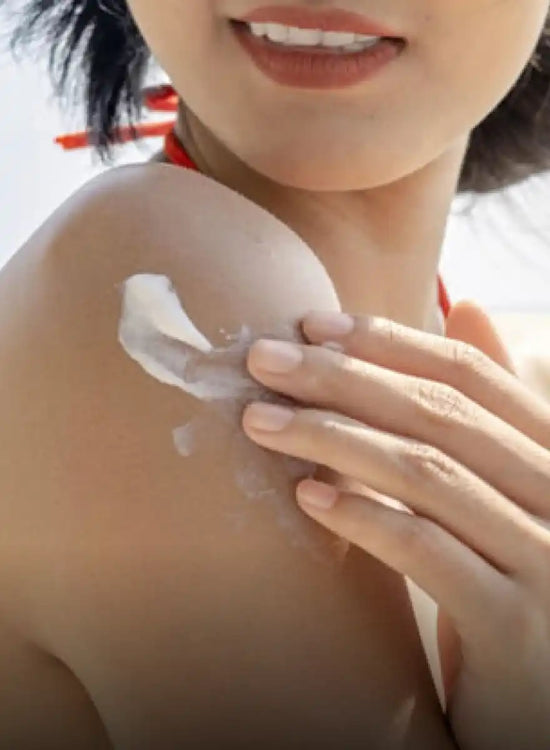
You walk into the bathroom, reach for what you have assumed was the safest sunscreen on your counter for years, and for some reason this time you flip it over and read the label. Half the words on the back of that tube belong in a chemistry textbook. Oxybenzone. Octinoxate. Octocrylene. Avobenzone. None of them sound like anything you would want on your skin, much less absorbing into it day after day.
That moment is why we wrote this guide. In 2026, the question is no longer which sunscreen has the highest SPF. It is which sunscreen has the fewest ingredients you cannot pronounce. The safest sunscreen on your shelf is the one with a label short enough to read in one breath, mineral filters that stay on the surface of your skin, and zero filler from a lab.
Below, you will find a tight, ingredient-vetted lineup of clean sun-care picks for 2026. Three full sunscreens and two companion products that round out a label-conscious routine. Every option uses six clean ingredients or fewer. Every option is built around the same idea: protect your skin without giving it anything you would not want on the inside.
The Safest Sun-Care Lineup from Sky and Sol
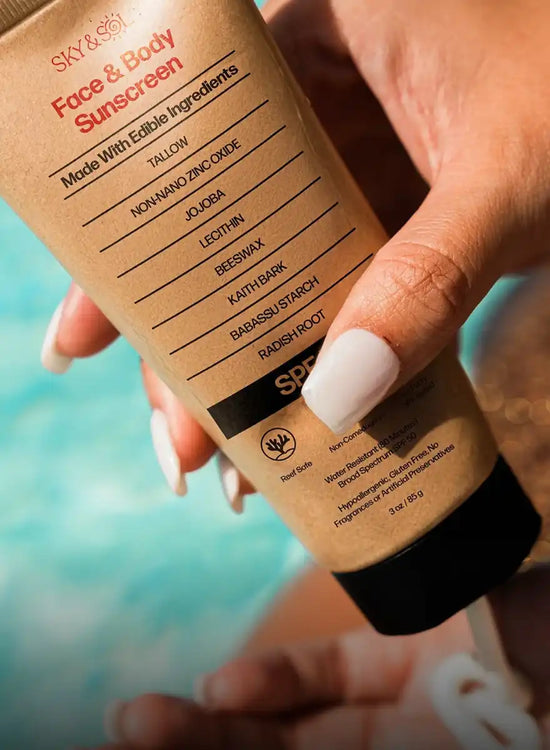
Every product below uses the same six clean ingredients or fewer. Non-nano zinc oxide coated in jojoba ester, jojoba oil, beeswax, propolis, and organic grass-fed tallow. Nothing else. No synthetic fragrance, no preservatives, no parabens, no chemical UV filters. Put together, that is what a clean mineral sunscreen looks like when the formula is built ingredient by ingredient, and it is the definition of an ingredient-safe sunscreen we work to every day.
Three of the picks are full sunscreens designed for different SPF needs. The other two are companion products. A moisturizer to layer underneath your SPF, and a lip balm for the spot most people forget. Together, they let you keep one ingredient philosophy across your entire sun-care routine.


What Makes a Sunscreen Safe in 2026?
Before ranking anything, it helps to define the word safe. What is the safest sunscreen, exactly? It is one that does two things at once: it blocks ultraviolet rays effectively, and it does it with a short, transparent ingredient list. That bar is what separates a non-toxic sunscreen from the rest.
Sunscreens fall into two camps. Mineral sunscreens use zinc oxide or titanium dioxide, which sit on top of the skin and physically deflect UV light. Chemical sunscreens use synthetic filters like oxybenzone, octinoxate, and avobenzone, which absorb into the skin and convert UV into heat. Both filter types are recognized by the FDA as effective UV protection when used as directed. The FDA has asked manufacturers for more long-term absorption data on several chemical filters — the same ongoing-review status mineral filters have carried in the past — which is not the same as a finding that they are unsafe.
Mineral filters come with their own trade-off: particle size matters. Research published in the Journal of Investigative Dermatology has examined how non-nano zinc oxide provides broad-spectrum UVA and UVB protection while staying on the surface of the skin rather than penetrating it. The particle is too large to slip through.
That is why every Sky and Sol formula leads with non-nano zinc oxide coated in jojoba ester. You get the broad-spectrum protection, and the short, legible ingredient list that comes with a mineral-first formula.
Third-party testing is the credibility floor here. Every Sky and Sol sunscreen is 3rd-party SPF tested and Broad Spectrum Certified, which means the SPF number on the bottle is the SPF number you get. That distinction matters more than most shoppers realize. According to the Skin Cancer Foundation, only about 30% of consumers understand what broad-spectrum protection means. If you have ever bought a sunscreen without checking that label, you are in good company.
The bar for safe in 2026 is short: a clean ingredient list, broad-spectrum coverage, and lab-verified SPF. That is the floor. Anything below it is not the safest sunscreen for you.
Ingredients We Don't Use
These are the ingredients we left out, and why. None of them are banned or found unsafe by the FDA for use in sunscreen — we simply build around a shorter list.

Oxybenzone. A chemical UV filter under continued FDA review for long-term absorption data; some research has raised hormone-related questions that remain unsettled.
Octinoxate. Another chemical filter under the same ongoing FDA review. Banned from sale in Hawaii under Act 104 for its effect on coral reefs, which is also why every reef-safe sunscreen formula leaves it out.
Octocrylene. Absorbs into the skin readily; some studies have raised questions about how its breakdown byproducts behave over time.
Homosalate. Shows up in bloodstream samples after application, which is why the FDA has requested further long-term safety data, consistent with its standard review process for older sunscreen actives.
Avobenzone. Less stable in sunlight; can degrade quickly without added stabilizers.
Parabens. A common preservative that some research has linked to hormone-related questions still under study.
Synthetic fragrances. A frequent irritant and a catch-all term that hides dozens of unlisted ingredients.
Choose the Safest Sunscreen for a Cleaner Routine
The safest sunscreen in 2026 is the one where the ingredient list is short enough to read in one breath and clean enough that you do not need to look up half the words. That is the bar we built the entire Sky and Sol lineup to clear.
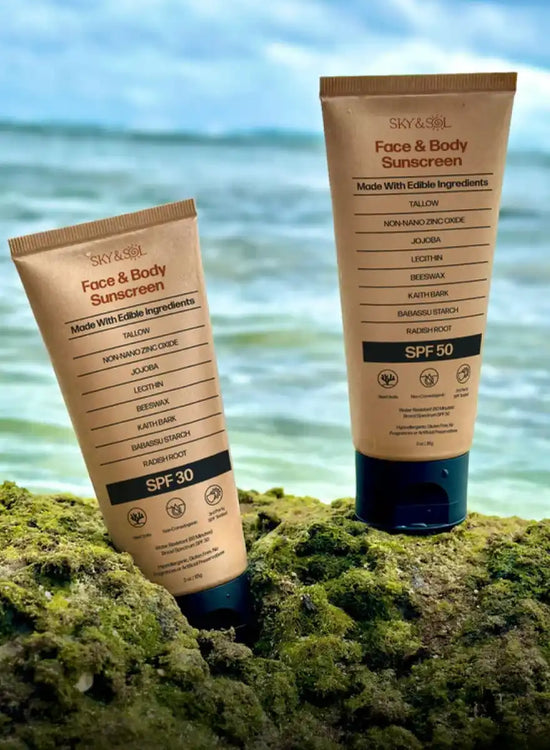
If you are ready to swap out the tube on your bathroom counter for something you can pronounce, start with the SPF 50 Face and Body if you want one bottle that handles everything from the morning commute to a Saturday at the lake. Go with the SPF 30 Face and Body if your days lean more indoor than outdoor and you want the lightest daily feel. From there, the Moisturizer and Lip Balm round out a label-conscious routine without adding a single ingredient you cannot name. Every product is backed by our 180-day, 100% satisfaction guarantee. Try it for a few months, and if it does not earn its place in your routine, send it back even if the bottle is half-empty. Peace of mind on your skin should not come with risk on your wallet.
How We Test for Safe (and How You Can Too)
Clean ingredients are only half the answer. The other half is what happens before the product reaches the bottle.
Every Sky and Sol sunscreen is 3rd-party SPF tested and Broad Spectrum Certified, which means the protection numbers come from an outside lab, not our own marketing department. Raw ingredients go through batch testing and purity testing before they enter the formula. The product is cold-processed to preserve the integrity of the tallow, jojoba, and propolis, which can lose their character under high heat. Packaging is eco-friendly and recyclable.
The ingredients are the part you can verify yourself. So here is a 30-second safety check for any sunscreen on the shelf.
Count the ingredients first. If the list runs more than ten, the formula is doing more than you asked for. Look for non-nano zinc oxide. That is your physical UV barrier and the strongest sign of a clean formula. Then scan for chemical filters to avoid, including oxybenzone, octinoxate, octocrylene, homosalate, and avobenzone. If you find any of them, put the bottle down.
That test works in any aisle, in any store, with any brand. Use it on us, too.
Frequently Asked Questions
Which sunscreen is free from harmful chemicals?
A clean sunscreen uses mineral filters like non-nano zinc oxide instead of chemical UV filters like oxybenzone, octinoxate, and octocrylene. The cleanest formulas keep the full ingredient list short and use natural emollients instead of synthetic preservatives or fragrances. The Sky and Sol lineup is built around a six-ingredient promise. The formulas use non-nano zinc oxide, jojoba oil, beeswax, propolis, and organic grass-fed tallow.
Why do you use tallow Is mineral sunscreen safer than chemical sunscreen?in your sunscreen? Is it also eco-conscious or cruelty-free?
Mineral sunscreen stays on the surface of your skin and physically deflects UV light. Chemical sunscreen absorbs into the skin, and some chemical filters can appear in bloodstream samples, which is why the FDA continues to request more long-term data on them. Both filter types are currently recognized by the FDA as effective when used as directed. Many label-conscious shoppers prefer mineral filters for the shorter ingredient list, not because chemical filters have been found unsafe.
What is the safest sunscreen for kids?
Sunscreen of any kind, including the safest sunscreen for infants on the market, is for babies above 6 months of age only. For younger infants, the standard recommendation is shade and protective clothing. From 6 months onward, a clean, mineral, fragrance-free formula is the gentlest fit for the whole family. The Sky and Sol Kids and Babies Sunscreen is formulated for that 6-month-and-up window, and the SPF 50 Face and Body and SPF 30 Face and Body work well for older kids and for the adults applying it.
Will a safe mineral sunscreen leave a white cast?
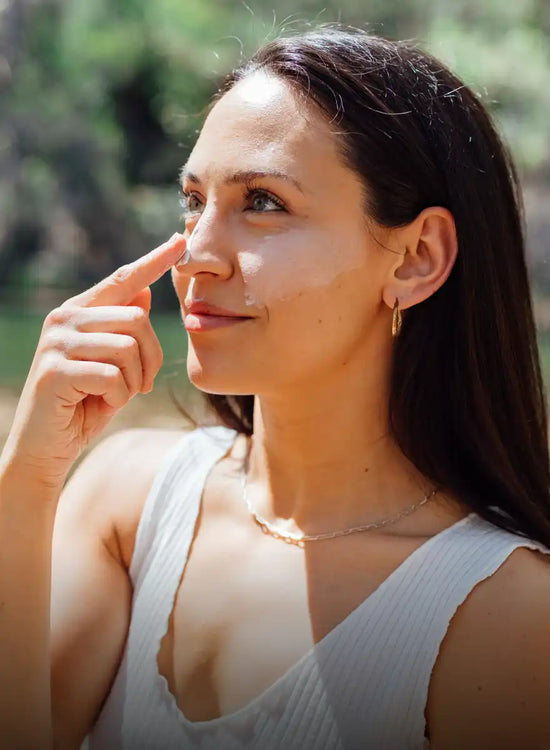
It does not have to. The white cast that gives mineral sunscreen a bad reputation comes from how the zinc oxide particles sit on the skin. Sky and Sol uses non-nano zinc oxide coated in jojoba ester, the anti-white-cast technology that lets the formula sink in clear. Rub it in and watch it disappear. The trade-off most people associate with mineral sunscreen no longer applies here.
Choose the Safest Sunscreen for a Cleaner Routine
The safest sunscreen in 2026 is the one where the ingredient list is short enough to read in one breath and clean enough that you do not need to look up half the words. That is the bar we built the entire Sky and Sol lineup to clear.
If you are ready to swap out the tube on your bathroom counter for something you can pronounce, start with the SPF 50 Face and Body if you want one bottle that handles everything from the morning commute to a Saturday at the lake. Go with the SPF 30 Face and Body if your days lean more indoor than outdoor and you want the lightest daily feel. From there, the Moisturizer and Lip Balm round out a label-conscious routine without adding a single ingredient you cannot name. Every product is backed by our 180-day, 100% satisfaction guarantee. Try it for a few months, and if it does not earn its place in your routine, send it back even if the bottle is half-empty. Peace of mind on your skin should not come with risk on your wallet.
Sources
American Academy of Dermatology. "How to Select a Sunscreen." American Academy of Dermatology Association, www.aad.org/public/everyday-care/sun-protection/shade-clothing-sunscreen/how-to-select-sunscreen.
U.S. Food and Drug Administration. "Sunscreen: How to Help Protect Your Skin from the Sun." FDA, www.fda.gov/drugs/understanding-over-counter-medicines/sunscreen-how-help-protect-your-skin-sun.
Smijs, Threes G., and Stanislav Pavel. "Titanium Dioxide and Zinc Oxide Nanoparticles in Sunscreens: Focus on Their Safety and Effectiveness." Nanotechnology, Science and Applications, vol. 4, 2011, pp. 95-112. PubMed Central, www.ncbi.nlm.nih.gov/pmc/articles/PMC3781714/.