
Best Sunscreen for Acne Prone Skin: Sky & Sol Buying Guide
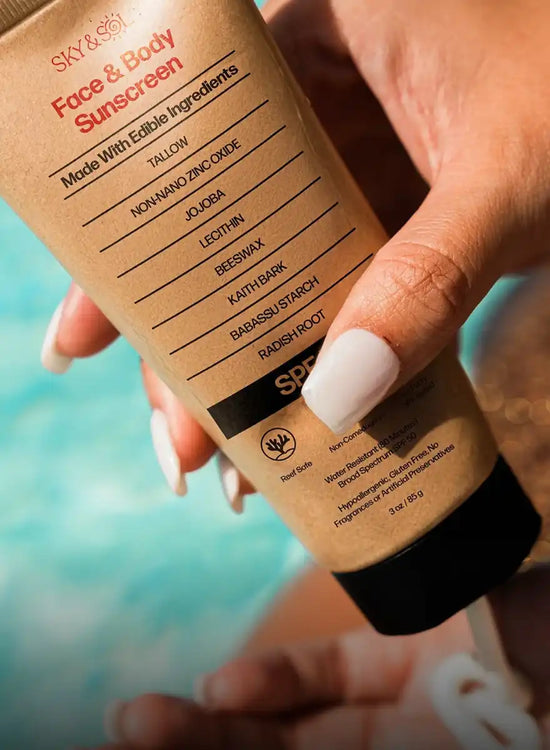
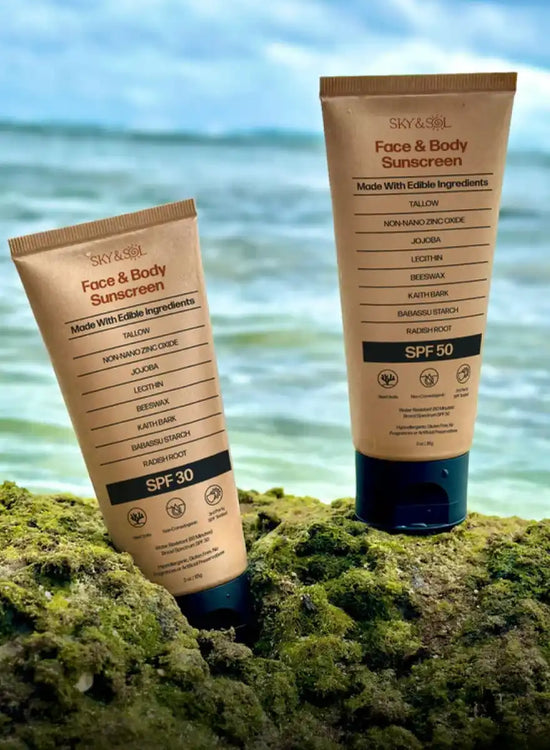


If you have acne-prone skin, sunscreen has probably let you down before. You bought the bottle that promised "non-comedogenic" protection and woke up with fresh bumps along your jaw. Or you skipped SPF entirely because every formula felt like a clogged pore in a tube. The short answer is simple. The best sunscreen for acne prone skin is a non-comedogenic mineral SPF built around non-nano zinc oxide, with no chemical filters, no fragrance, and none of the filler oils known to clog pores. For most readers, that means Sky and Sol's Face & Body Sunscreen SPF 50.
UV exposure isn't a side issue for breakout-prone skin. The sun darkens post-acne marks and slows the fade of scars, which pushes hyperpigmentation deeper. Skipping SPF to avoid breakouts is the most common mistake in an acne routine, and it compounds fast.


Why Acne-Prone Skin Needs a Specific Kind of Sunscreen
Most acne-prone people skip sunscreen because the last three formulas they tried clogged pores or triggered a flare. The instinct is reasonable. But the answer is to find a sunscreen that works for your skin, not skipping protection entirely.
Here’s the part nobody mentions. “Non-comedogenic” is largely self-declared. No regulatory body audits the term. Two products can carry the same label and behave nothing alike on skin, because what matters is the full ingredient deck, not the marketing word. Filler oils, denatured alcohol, fragrance, and certain chemical UV filters can quietly inflame compromised skin and trap bacteria under an occlusive film.
That’s also why UV exposure turns a single pimple into a months-long brown mark. Post-inflammatory hyperpigmentation is fueled by sun. So the goal is sunscreen for acne prone skin that protects against UVA and UVB without aggravating the very condition you’re trying to manage.
What to Look for in a Sunscreen for Acne Prone Skin
- A mineral active. Zinc oxide, often paired with titanium dioxide, sits on the skin’s surface and reflects UV. The FDA classifies both as Generally Recognized as Safe and Effective (GRASE), and they’re the only two sunscreen filters with that status. Mineral actives are also less likely to irritate inflamed skin than chemical filters that absorb UV and convert it to heat.
- A clean formulation with no pore-clogging fillers. Coconut oil and isopropyl myristate are two of the most common culprits in “natural” or cosmetic SPFs. Fragrance and denatured alcohol can irritate active breakouts. Strip those out and most people stop reacting to their sunscreen almost overnight.
- A lightweight, breathable finish. Heavy occlusive textures trap sebum and bacteria. You want a cream that sinks in fast and lets the skin breathe, not one that sits on top like a sealant. Look for broad-spectrum SPF 30 or higher. The American Academy of Dermatology recommends SPF 30 as the daily baseline and SPF 50 for outdoor wear.
- Tinted is optional. A non-comedogenic tinted sunscreen for acne prone skin can help even out post-acne marks, but the untinted version covers the same protective ground.
Why Mineral SPF Beats Chemical SPF for Breakout-Prone Skin
Mineral filters reflect UV at the skin’s surface. Chemical filters absorb UV and convert it into heat inside the skin. For inflamed, breakout-prone faces, that conversion can intensify redness and trigger flushing in heat-sensitive zones.
A peer-reviewed NIH review on zinc oxide and titanium dioxide in sunscreen notes that zinc oxide has well-documented anti-inflammatory properties and is consistently well tolerated by sensitive skin types. That matters when your barrier is already irritated from breakouts or actives.
Mineral isn’t a magic word, though. Some mineral sunscreens are still loaded with pore-clogging oils, fragrance, and white-cast pigments that look chalky on deeper tones. The formula around the zinc still matters, which is why the Sky and Sol picks below were chosen.
Ingredients We Don't Use

Cleanse first with a gentle, low-strength cleanser so your skin barrier is intact and there’s no surfactant residue left to react with SPF. A tallow-based oil cleanser like Sky and Sol’s Cleansing Oil works well here because it lifts sebum and SPF residue without stripping the barrier. Skipping a real cleanse is one of the most common causes of next-morning breakouts under sunscreen.

Apply any spot treatments and let them dry fully before moving on. Most “pilling” comes from layering wet products. If your benzoyl peroxide or salicylic acid is still tacky, sunscreen will roll right off it.

Use two finger-lengths of sunscreen for the face, full stop. Most acne-prone people apply half the protective amount because they fear residue. Mineral SPF only works at full coverage. Underdosing is the same as not wearing sunscreen at all on the spots you missed.

Reapply every two hours outdoors or after heavy sweating. A powder mineral SPF works for on-the-go touch-ups over makeup, but the morning base layer is what carries the protection.
Frequently Asked Questions
Which Sky and Sol sunscreen is best for acne-prone skin?
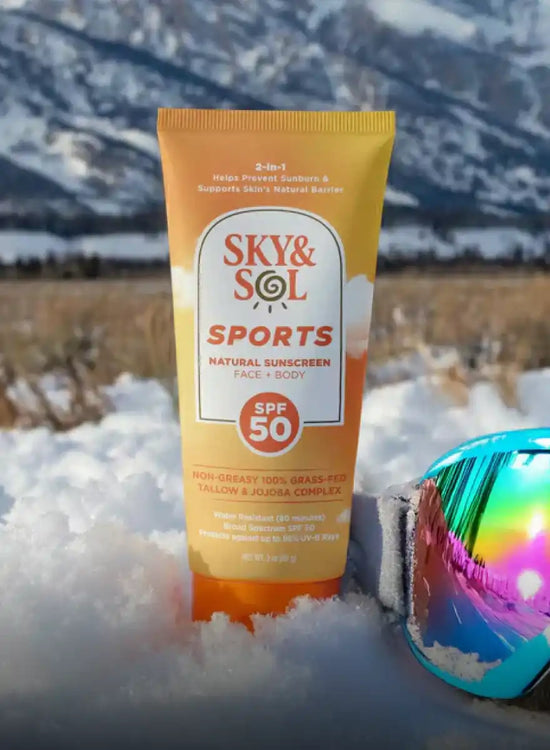
The Face & Body Sunscreen SPF 50 is the right pick for most readers. If breakouts also hit your back or chest, add the XL Body Sunscreen. If sweat is your trigger, swap in the Sports Sunscreen for outdoor wear. And use the Lip Jelly SPF 25 for the perioral zone most people forget.
Is mineral sunscreen better than chemical sunscreen for acne?
For most acne-prone readers, yes. Mineral filters protect at the surface, don’t heat the skin, and carry a lower irritation risk on inflamed barriers. Zinc oxide also has documented anti-inflammatory properties, which is why dermatologists often route sensitive and breakout-prone patients toward mineral options.
Will tallow-based sunscreen clog my pores?
Tallow’s fatty acid profile is unusually close to human sebum, which is why it tends to absorb cleanly and behave non-comedogenically when formulated without filler oils. Sky and Sol’s formula skips coconut oil, isopropyl myristate, and the other usual offenders, pairing grass-fed tallow with non-nano zinc oxide and jojoba. The result reads more like a moisturizer than a sealant.
What ingredients should acne-prone skin avoid in sunscreen?
Steer clear of oxybenzone and avobenzone (chemical filters that can irritate compromised barriers), fragrance and denatured alcohol (both common irritants on inflamed skin), and the two most pore-clogging filler oils in cosmetic SPFs, coconut oil and isopropyl myristate. If those are anywhere on the ingredient deck, the sunscreen isn’t built for breakout-prone skin.
Can I use this sunscreen with tretinoin or benzoyl peroxide?
Yes, and mineral SPF is the safer pairing with topical actives. Apply your tretinoin or benzoyl peroxide at night, let it absorb fully in the morning under moisturizer, and only then layer sunscreen on top. Stacking SPF on a still-wet active is the fastest way to pill.
Find Your Sky & Sol Sunscreen
If you’ve ignored sunscreen because nothing felt right, the Sky and Sol approach is built for you. Start with the Face & Body Sunscreen SPF 50 if you only buy one. Add the XL Body Sunscreen for back and chest coverage, the Sports Sunscreen for active days, and the Lip Jelly for the part of your face the rest of the routine misses.
Whichever pick you choose, the 180-day guarantee means you can use the bottle, see how your skin responds, and return it for a full refund if it doesn’t work. Shop the Sunscreen for Oily and Acne-Prone Skin collection to compare your options side by side.
Sources
American Academy of Dermatology. “How to Select a Sunscreen.” American Academy of Dermatology, www.aad.org/public/everyday-care/sun-protection/shade-clothing-sunscreen/how-to-select-sunscreen.
U.S. Food and Drug Administration. “Sunscreen: How to Help Protect Your Skin from the Sun.” FDA, www.fda.gov/drugs/understanding-over-counter-medicines/sunscreen-how-help-protect-your-skin-sun.
Smijs, Threes G., and Stanislav Pavel. “Titanium Dioxide and Zinc Oxide Nanoparticles in Sunscreens: Focus on Their Safety and Effectiveness.” Nanotechnology, Science and Applications, vol. 4, 2011, pp. 95–112. PubMed Central, www.ncbi.nlm.nih.gov/pmc/articles/PMC3781714/.