
Best Daily Sunscreens for Everyday Wear



The best daily sunscreen is broad-spectrum SPF 30 or higher, comfortable enough to use consistently, and suited to your face, body, skin type, and usual sun exposure. Our six picks cover lighter daily wear, higher-SPF protection, full-body coverage, minimalist formulas, and non-tallow alternatives, so there is no single winner for everyone.
This buyer guide compares current Drug Facts labels, active UV filters, package sizes, water-resistance claims, formula bases, and everyday practicality. This label-based comparison excludes independent SPF testing and hands-on wear testing. A randomized trial of 903 adults, the daily-sunscreen group showed 24% less measured skin aging after 4.5 years than the discretionary-use group.
Best Daily Sunscreens at a Glance
Start with your routine, not the marketing. A commuter who wants a comfortable face sunscreen for daily wear has different needs from someone covering arms and legs for a long afternoon outside. The right daily wear sunscreen should feel practical enough for consistent use.
All six products meet the roundup's baseline of broad-spectrum SPF 30 or higher. The biggest differences are filter concentration, formula base, package size, water-resistance duration, and how much texture or mineral cast you are willing to manage. A daily use sunscreen still has to fit your routine well enough for consistent application.
Best Sky and Sol Sunscreens for Daily Wear
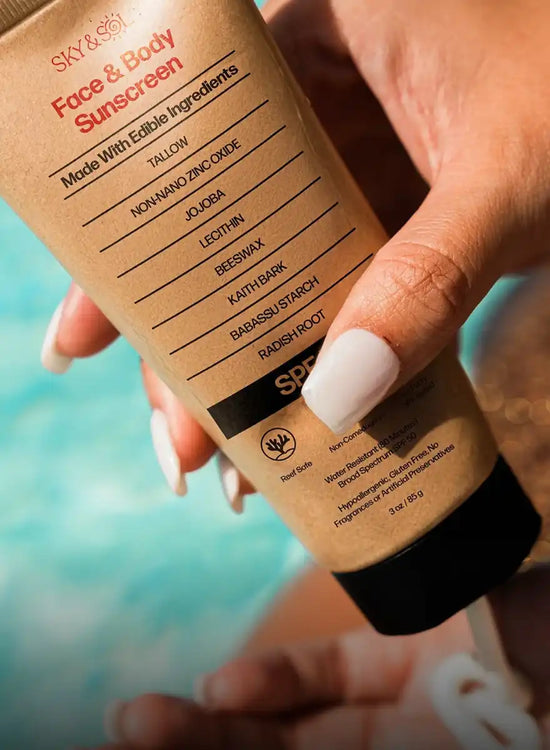
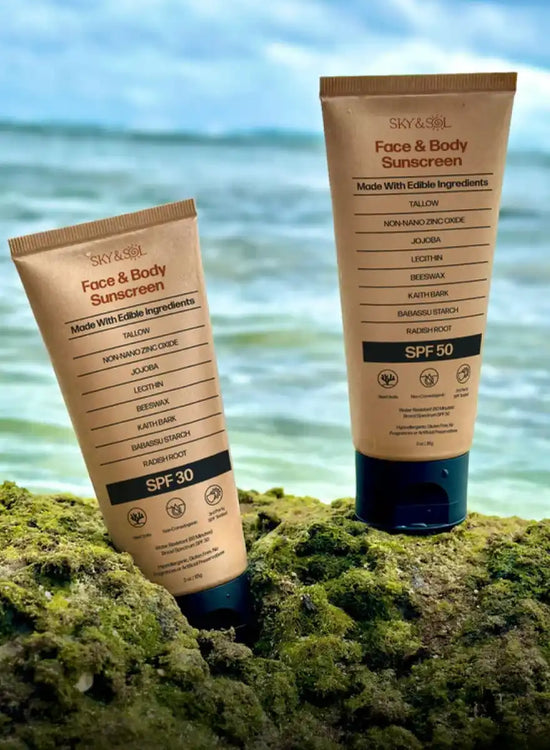
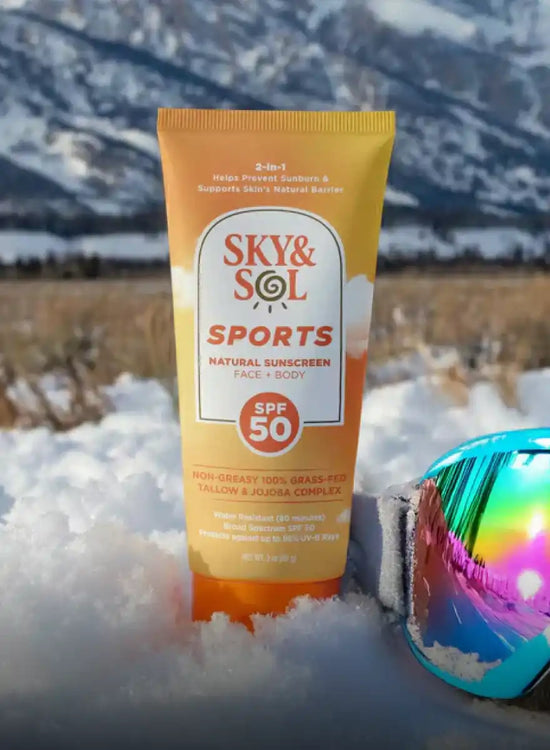
Sky and Sol's daily sunscreen range uses zinc oxide as the only active UV filter. Its mineral sunscreen formulas pair mineral protection with tallow and plant-derived oils or waxes, and the current labels list no added fragrance. That is the draw.
There are tradeoffs. Mineral formulas can look more visible on some skin tones, and higher-zinc creams can need more careful blending. Sky and Sol describes its newer formulas as designed to reduce white cast, but that is brand positioning rather than independent wear-test evidence.
The right Sky and Sol option depends mainly on exposure and coverage. The SPF 30 sunscreen is the lighter everyday choice, the 3-ounce SPF 50 offers a higher labeled protection level for face and body, and the 7.05-ounce tube makes repeated body application more practical.


Other Daily Sunscreens Worth Considering
Some shoppers avoid animal-derived ingredients, prefer a water-based lotion, want a widely stocked mineral sunscreen, or value a shorter formula. The best sunscreen for daily use depends on those priorities, and these three alternatives offer distinct reasons to choose a different product.


How We Chose the Best Daily Sunscreens
We started with the American Academy of Dermatology's practical baseline. That means broad-spectrum protection and SPF 30 or higher, with water resistance when swimming or sweating is likely. Every product here meets the SPF threshold, and all have current Drug Facts information that lets shoppers compare them on the same terms.
Next, we looked at everyday usability. A sunscreen for everyday use has to make sense for the face, a handbag, or full-body application, so package size matters. Formula base and active-filter percentage can influence spread, richness, and cast risk, but a label cannot predict exactly how a sunscreen will feel on your skin.
We separated verifiable facts from positioning. SPF, active ingredients, water resistance, and package size come from labels. Descriptions such as lighter, silky, reduced-cast, or sensitive-skin friendly may come from brands or customers and should not be treated as independent test results.
When choosing the best sunscreen for everyday use, we looked for the catch with each option. A short ingredient list can still feel heavy, SPF 50 still needs reapplication, and an 80-minute water-resistance claim never means all-day protection. Popularity cannot tell you how a formula will feel on your skin.
Does More Zinc Oxide Mean Better Daily Protection?
A higher zinc oxide percentage does not automatically make a daily sunscreen more protective. FDA labeling rules require separate SPF and Broad Spectrum tests on the finished formula, so active-filter percentage is not a shortcut for performance.
Sky and Sol shows why the label matters. Its current DailyMed listings pair 15% zinc oxide with SPF 30 and 25% with SPF 50. Both products direct users to apply generously and reapply at least every two hours, so choose by labeled SPF, feel, and routine rather than zinc percentage alone.
SPF 30 vs. SPF 50 for Everyday Wear
The best everyday sunscreen may be SPF 30 or SPF 50. Both can support reliable daily protection when they are broad-spectrum, applied generously, and reapplied as directed. SPF 50 offers higher labeled UVB protection. It does not buy you more time. Reapplication rules stay the same.
Real-world protection drops when you use too little, miss areas, or skip reapplication. SPF 50 still requires full coverage. A thin layer or an unprotected hairline, ears, neck, or hands leaves gaps regardless of the SPF number.
For routine lower-exposure days, SPF 30 may be easier to wear if you prefer a lighter cream. For longer outdoor exposure or a higher labeled protection level, SPF 50 may suit you better. Our SPF 30 versus SPF 50 guide goes deeper into the numbers and tradeoffs.
How Long Does a 3-Ounce Sunscreen Tube Last?
Treat a 3-ounce tube as a few full-body applications, not a season's supply. The American Academy of Dermatology says most adults need about 1 ounce to cover exposed skin, and some need more based on body size.
That is where package size changes daily convenience. Sky and Sol's 3-ounce face-and-body tube is easier to carry, and its 7.05-ounce body tube reduces how often a regular body-sunscreen user needs a replacement. Pick the smaller tube for portability or the larger one for exposed arms and legs, but use the same generous application standard.
How to Apply Sunscreen for Reliable Daily Protection
Timing matters. If you are deciding how much sunscreen to use on your face daily, the American Academy of Dermatology recommends at least 1 teaspoon. Apply sunscreen about 15 minutes before going outdoors, and use around 1 ounce for exposed body skin, roughly enough to fill a shot glass.
Remember the easy-to-miss areas, including your ears, neck, hairline, hands, the tops of your feet, and any exposed scalp. For your face, apply sunscreen after skincare and before makeup, then give the layer time to settle rather than rubbing it away immediately.
The FDA says to reapply at least every two hours outdoors and more often after swimming or sweating. Follow the product's 40- or 80-minute water-resistance directions and reapply immediately after towel drying.
Water-resistant does not mean waterproof, and SPF 50 does not mean all-day protection. Our sunscreen versus sunblock guide explains why current FDA labeling avoids terms that can overstate how long protection lasts.
Daily Sunscreen FAQs
Which brand of sunscreen is best for oily skin?
Should you use sunscreen every day? Yes. The best daily sunscreen is a broad-spectrum SPF 30 or higher that you can apply generously and consistently. Choose mineral or chemical filters based on preference and tolerance, then pick a face or body texture that fits where you will use it.
No universal formula works for everyone. Use the comparison table to narrow the field by SPF, filter, package size, water resistance, and formula base.
Is SPF 30 Enough for Daily Use?
Yes, broad-spectrum SPF 30 is enough for many routine days when it is applied correctly and reapplied. SPF 50 may suit longer outdoor exposure or anyone who prefers a higher labeled protection level.
A higher SPF does not change the two-hour reapplication guidance. It leaves missed spots and thin coverage unprotected.
Can You Use Body Sunscreen on Your Face?
Yes, if the Drug Facts label permits face use and the formula does not irritate your skin. A daily sunscreen for your face may feel lighter or layer under makeup more easily, but body creams tend to prioritize package size and broad coverage.
Patch test if you are reactive or acne-prone, and keep sunscreen out of your eyes. Sky and Sol's face-and-body format is the more flexible choice, and its XL body tube is designed around coverage and quantity.
How Often Should You Reapply Daily Sunscreen?
Reapply at least every two hours while outdoors, and sooner after swimming, sweating, or towel drying according to the label. Water resistance is tested for either 40 or 80 minutes and is not the same as waterproof protection.
On an indoor desk day, follow the label and reapply when you return to meaningful outdoor exposure. If a medical condition, active irritation, or past sunscreen reaction complicates your choice, talk with a board-certified dermatologist.
Choose the Daily Sunscreen You Will Actually Use
Wearing sunscreen every day works best when the formula fits your routine. Consistent, generous use matters more than chasing a perfect ingredient list or the highest number on the shelf. Choose based on exposure, skin feel, coverage area, formula preferences, and how realistically you will reapply.
The best daily sunscreens fit real routines. Sky and Sol SPF 30 suits lighter daily wear. For more labeled protection, compare the 3-ounce face-and-body SPF 50 with the 7.05-ounce body tube. Blue Lizard, Badger, and Pipette remain credible choices if you prefer other formula bases or package sizes. Start with the Drug Facts, pick the option you can apply generously each morning, and check how it feels during your normal routine. Sky and Sol backs its sunscreen with a 180-day satisfaction guarantee, which gives you time to judge fit without rushing the decision.