
Mineral Sunscreens During Pregnancy: 4 Options Compared


If you want the short answer, compare mineral sunscreens by labeled SPF, water resistance, texture, and where you plan to wear them. Of the four options reviewed here, Sky & Sol Face & Body SPF 50 is our top pick for higher-SPF outdoor use. Its SPF 30 sibling offers a lighter daily feel, while Badger Active Mineral SPF 30 and CeraVe Hydrating Mineral SPF 50 provide different formula and texture options.
“Pregnancy-safe sunscreen” is not a formal FDA category or certification. This guide compares current mineral sunscreen labels and practical product features. It does not confirm that any formula is appropriate for every pregnancy, allergy, skin condition, or individual sensitivity. Ask your OB-GYN or dermatologist about concerns specific to you.
4 Mineral Sunscreens Compared at a Glance
These products are compared by labeled SPF, water resistance, texture, finish, and intended use. Their order is not a medical safety ranking or certification.

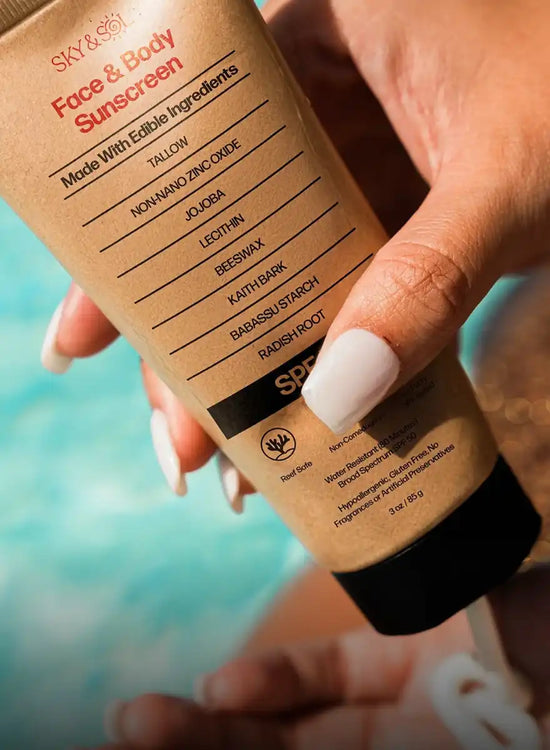
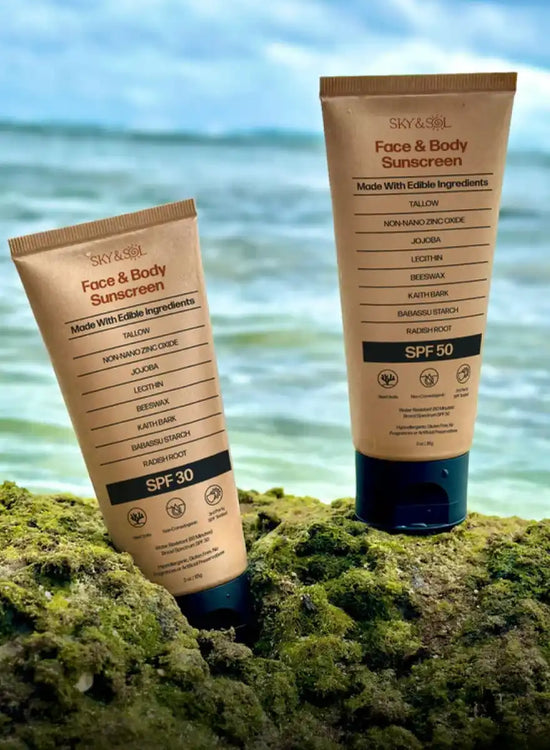
Sky & Sol Face & Body Sunscreen SPF 50 is our top pick for higher-SPF outdoor use based on the comparison criteria in this guide: labeled SPF, water resistance, face-and-body use, and texture. Its current label lists 25% zinc oxide and calls for reapplication after 80 minutes of swimming or sweating, immediately after towel drying, and at least every two hours.

Sky & Sol Face & Body Sunscreen SPF 30 is the lighter daily-wear option in this comparison. Its current label lists 15% zinc oxide and 10 inactive ingredients. The formula carries the same 80-minute water-resistance window as the SPF 50 option.

Badger Active Mineral Sunscreen SPF 30 is our minimal-ingredient alternative. Its label lists 18.75% zinc oxide, five total ingredients, and 40 minutes of water resistance. Expect a dense, oil-rich texture.

CeraVe Hydrating Mineral Sunscreen SPF 50 Face is our accessible face option. It combines 9% titanium dioxide with 7% zinc oxide and includes niacinamide, ceramides, and sodium hyaluronate. The current label does not state water resistance.
How We Compared These Mineral Sunscreens
Ingredient count alone does not tell you whether a sunscreen will suit your skin or routine. We applied the same practical screen to every product and kept the labels, not the marketing, at the center.
- Mineral-only active filters such as zinc oxide, titanium dioxide, or both.
- Broad-spectrum SPF 30 or higher for everyday UVA and UVB protection.
- A current Drug Facts label that identifies active filters and reapplication directions.
- Wearability details, including finish, likely white cast, and face-versus-body fit.
- Clear tradeoffs, including water resistance, fragrance status, animal-derived ingredients, and formula complexity.
Formulas can change, even when the product name stays the same. Check the package you are buying against the details here. If you have reactive skin, known allergies, or a high-risk pregnancy, review the full inactive ingredient list with your clinician and patch test as directed.
These are not interchangeable formulas. Sky & Sol uses a tallow-and-wax base, Badger leans on sunflower oil and beeswax, and CeraVe uses a longer face-care formula with niacinamide, ceramides, and sodium hyaluronate. Water-resistance labels range from 40 to 80 minutes. CeraVe’s current label does not state a water-resistance claim. Those differences matter more than a neat ingredient-count headline.
4 Mineral Sunscreen Options for Pregnancy
No single formula wins every routine. A useful sunscreen is one you can apply liberally and reapply on time. Each pick below uses mineral filters, then takes a different route on finish, water resistance, and ingredient preferences.


Compare the Top Picks
The table keeps the comparison to current label fields and practical tradeoffs. Check your package before buying again because active percentages, inactive ingredients, and directions can change.


A 40-minute or 80-minute rating tells you how long the tested sunscreen retains its labeled SPF while swimming or sweating. It does not describe all-day wear. When no water-resistance duration appears on the current label, use another sunscreen for swimming or heavy sweating.
How to Evaluate Sunscreen During Pregnancy
Tallow is an inactive ingredient that affects a formula’s texture and suitability for different preferences. Its presence does not establish whether a sunscreen is appropriate during pregnancy.
Sky & Sol uses tallow in the inactive base of its SPF 30 and SPF 50 mineral formulas. The current Drug Facts labels list zinc oxide as the active UV filter and 80 minutes of water resistance. Those regulated label details tell you more about sun protection than the tallow claim alone.
Treat tallow as a texture and preference question. It may suit someone who wants a richer face-and-body cream, but it is animal-derived and will not fit a vegan routine. Review the full inactive list for tallow, beeswax, botanicals, and personal allergy triggers, then ask your clinician about concerns tied to your pregnancy.
What Role Does Tallow Play in Sunscreen?
Tallow is an inactive ingredient that affects a formula’s texture and suitability for different preferences. Its presence does not establish whether a sunscreen is appropriate during pregnancy.
Sky & Sol uses tallow in the inactive base of its SPF 30 and SPF 50 mineral formulas. The current Drug Facts labels list zinc oxide as the active UV filter and 80 minutes of water resistance. Those regulated label details tell you more about sun protection than the tallow claim alone.
Treat tallow as a texture and preference question. It may suit someone who wants a richer face-and-body cream, but it is animal-derived and will not fit a vegan routine. Review the full inactive list for tallow, beeswax, botanicals, and personal allergy triggers, then ask your clinician about concerns tied to your pregnancy.
Mineral vs. Chemical Sunscreen During Pregnancy
Mineral sunscreens use zinc oxide, titanium dioxide, or both as their labeled active filters. Many chemical formulas use filters such as avobenzone, oxybenzone, octinoxate, octocrylene, octisalate, or homosalate. Choosing mineral during pregnancy follows current AAD guidance and gives readers who prefer fewer unknowns a clear route to broad-spectrum protection.
That does not make chemical sunscreen a synonym for harm. In a randomized clinical trial of 24 healthy adults, four chemical sunscreen actives reached measurable plasma concentrations under maximal-use conditions. Participants applied product to 75% of body surface area four times daily for four days. The researchers said the results supported further study of clinical significance, not that the ingredients caused pregnancy harm or that people should stop using sunscreen.
The balanced takeaway is to avoid fear-based shortcuts. Absorption is not the same as a proven adverse outcome, and the study was not a pregnancy-outcome trial. If you would rather sidestep that uncertainty, mineral-only products are easy to identify on the Drug Facts panel. If mineral texture or cast keeps you from using enough sunscreen, discuss workable alternatives with your clinician rather than going without protection.
Mineral formulas are not interchangeable, either. A zinc-only cream can feel markedly different from a zinc-and-titanium lotion because the inactive base, particle dispersion, tint, and film-forming system shape how it spreads and looks. The percentages on two labels do not predict comfort or cast by themselves.
Start with the filter type and SPF, then use water resistance and texture to match the product to the day. That sequence keeps the comparison grounded in protection without ignoring whether you will wear it.
How Often Should You Reapply Sunscreen During Pregnancy?
Follow the directions on the exact product you buy. FDA sunscreen guidance explains that water-resistant labels must state either 40 or 80 minutes, and sunscreen should still be reapplied at least every two hours. All four labels say to apply 15 minutes before sun exposure. The water-resistant Sky & Sol and Badger labels add reapplication after the stated water window and after towel drying. CeraVe tells users to choose a water-resistant sunscreen for swimming or sweating.
Use enough product to cover every exposed area evenly. Do not thin out a mineral formula only to reduce cast because a sparse layer may not deliver the protection represented by the label. Reapply sooner after swimming, sweating, or towel drying according to the product’s stated window.
Build the application around areas people commonly miss. Cover the ears, hairline, jaw, neck, upper chest, backs of the hands, and tops of the feet when they are exposed. Apply before getting dressed if clothing edges are likely to shift.
For the face, let skincare settle first, spread sunscreen evenly, and allow the film to set before makeup. If pilling occurs, change one layer or give products more drying time instead of cutting back the sunscreen amount.
- Seek shade, especially during the strongest midday sun.
- Wear a wide-brimmed hat and UV-protective sunglasses.
- Cover skin with tightly woven or sun-protective clothing when practical.
- Keep sunscreen accessible so a scheduled reapplication is easy to complete.
Water resistance always has a time limit, and a high SPF does not turn one morning application into all-day coverage. Makeup with SPF can supplement a routine, but it does not replace the generous, even application and timely reapplication on the sunscreen label.
Can You Use the Same Sunscreen on Your Face and Body During Pregnancy?
Yes, a face-and-body mineral sunscreen can cover both areas if its finish suits your skin and you use enough.
Sky & Sol labels both current formulas for face and body. SPF 30 is the lighter option with less visible cast, and SPF 50 offers the higher SPF with a somewhat thicker finish. Both labels call for a full layer 15 minutes before sun exposure and reapplication after 80 minutes of swimming or sweating, after towel drying, and at least every two hours.
A single tube can make reapplication easier on outdoor days, especially for the neck, chest, ears, and hands. A separate face lotion can still be the better choice under makeup or for skin that dislikes a richer base. Test the full amount before relying on it for a long day, since comfort matters only if you can keep the labeled layer in place.
Sunscreen During Pregnancy FAQs
Can You Use Sunscreen While Pregnant?
Yes. Sunscreen remains an important part of sun protection during pregnancy. A straightforward pregnancy-conscious approach is broad-spectrum SPF 30 or higher with zinc oxide, titanium dioxide, or both, plus shade and protective clothing.
The best choice is one you can apply generously and reapply as directed. If you have a skin condition, allergy, or concern about a specific ingredient, ask your OB-GYN or dermatologist for individualized guidance.
What Does AAD Guidance Say About Zinc Oxide During Pregnancy?
AAD guidance recommends physical sunscreen with zinc oxide, titanium dioxide, or both during pregnancy. That advice applies to topical use and does not make every formula universally risk-free.
Zinc oxide is only the active-filter part of the decision. Review the inactive list for fragrance, animal-derived ingredients, oils, botanicals, preservatives, and anything that has caused a reaction before. Patch testing can be useful for reactive skin.
Should You Avoid Oxybenzone During Pregnancy?
Some pregnant readers choose to avoid oxybenzone because current dermatology guidance points them toward mineral filters and those alternatives are readily available. The absorption research discussed above does not establish that oxybenzone causes pregnancy complications.
For a closer look at the evidence and its limits, read our oxybenzone and pregnancy guide. If you need a personal risk decision, bring the exact label to your OB-GYN or dermatologist instead of relying on a blanket internet claim.
How Often Should You Reapply Sunscreen?
Reapply at least every two hours outdoors, and sooner after swimming, sweating, or towel drying. A product labeled for 40 minutes or 80 minutes of water resistance reaches its tested water-exposure limit at that point, so follow the shorter schedule when it arrives first.
Cloud cover, makeup, and a high SPF do not cancel that direction. A phone reminder and a tube kept in your bag can make consistent reapplication much easier.
Choose the Sunscreen You Will Use Consistently
Choose Sky & Sol SPF 50 when you want a higher-SPF, tallow-based face-and-body formula with 80 minutes of labeled water resistance. Choose Sky & Sol SPF 30 when a lighter daily feel is more likely to keep you consistent. Badger may fit a preference for a short, unscented ingredient list. CeraVe offers a familiar mineral face lotion with barrier-supporting ingredients.
Whichever formula you choose, confirm the current package, apply enough, and reapply on time. Compare Sky & Sol’s SPF 30 and SPF 50 by your daily routine and outdoor exposure, then ask your OB-GYN or dermatologist about any pregnancy, allergy, or skin-condition concern that is personal to you.
Sky & Sol backs both formulas with a 180-day satisfaction guarantee, including used products. That gives you time to test the full amount, watch how the mineral finish behaves on your skin, and see which SPF fits your routine. Compare the current SPF 30 and SPF 50 labels first, choose the one you can reapply without hesitation, and bring any personal ingredient concern to your OB-GYN or dermatologist.