
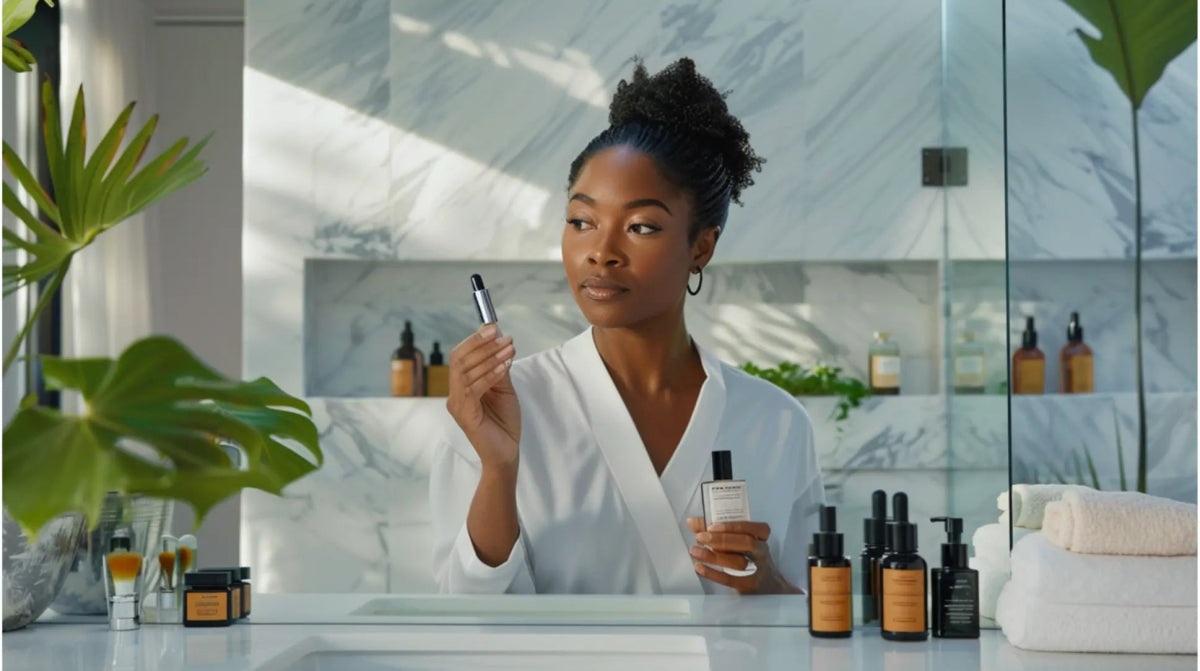
If you're deciding whether to apply serum or sunscreen first, choose treatment serum first. Sunscreen is still essential, but the sequence keeps each product in its intended place.
Use serum, moisturizer if needed, sunscreen, and then makeup. That order keeps sunscreen as the final skincare step before makeup and makes the routine easy to repeat.
Product labels take priority when directions differ. The guide below explains how to layer the two without mixing them and with product labels guiding the timing.
Key Takeaways: Serum or Sunscreen First?
-
Sky and Sol's mineral sunscreen combines 25% non-nano zinc oxide with nourishing tallow in SPF 30 and SPF 50 options and belongs after treatment serum and optional moisturizer as the final skincare step before makeup.
-
Apply serum and sunscreen as separate layers, following each product's label instead of mixing the two in your hand.
-
Use a separate moisturizer only when your skin needs it and the product directions support it, since dermatology guidance places moisturizer and/or sunscreen after treatment.
-
Use broad-spectrum SPF 30 or higher before daytime sun exposure, then reapply at least every two hours and after swimming or sweating.
Why Serum Typically Goes First
A treatment serum usually belongs early in your routine, after cleansing and before moisturizer or sunscreen. This gives the formula direct contact with clean skin and keeps richer products and sunscreen in their usual later positions.
Absorption Advantage
The American Academy of Dermatology recommends applying medication or treatment after cleansing, followed by moisturizer and/or sunscreen. Your serum's label should guide the details, but a treatment serum usually comes before the products that finish the routine.
Treating Directly
Applying serum before sunscreen keeps the steps easy to separate. Use treatment first and save the final sun-protection layer for later. The goal is to keep each product in its intended place without treating sunscreen as a barrier that blocks every serum ingredient.
The Thin-to-Thick Rule
Often, skincare products are layered from thinnest to thickest consistency. Serums are typically lighter and more watery than most sunscreens, making them the ideal first step after cleansing and toning.
Read More: SPF 50 Sunscreen for Face vs Body: What's the Difference?
Read More: 5 Best Sunscreens for Acne-Prone Skin (2025)
Sunscreen's Role: The Protective Final Layer
Now, let's talk about sunscreen. As the final skincare step, it should be spread evenly over exposed skin according to the label. Apply serums and moisturizers first so you are not adding more skincare over the sunscreen.
Create an Even Sunscreen Layer
Apply sunscreen as the final skincare product so the finished layer is not followed by another serum or moisturizer.
Apply Sunscreen Evenly
For sunscreen to perform as labeled, apply it evenly as the last skincare product in your morning routine, before makeup. Follow the package directions for the amount, application, and reapplication.
Read More: Why High SPF Sunscreen is Essential for Sun Safety
Read More: Is Higher SPF Always Better? What You Need to Know
Finish With Sunscreen
Protect your skin by saving sunscreen for the final skincare step. This leaves the sun-protection layer in place before you add makeup.
The Morning Skincare Routine: Serum and Sunscreen in Action
If you're deciding whether to apply sunscreen before or after serum, apply it after. Follow this simple morning routine to use serum and sunscreen in the right order.
Step 1: Cleanse Gently
Start with a clean slate by gently washing your face.
Step 2: Tone (Optional Refresh)
If you use a toner, apply it after cleansing.
Step 3: Apply Your Serum
Smooth your serum over your face and neck, following its label. Let the texture settle before adding the next layer.
Step 4: Moisturize (If Your Skin Needs It)
Add moisturizer if your skin needs more comfort. You can skip a separate moisturizer when your serum or sunscreen already provides enough moisture, as long as the product directions support that routine.
Step 5: The Final Step: Sunscreen
Generously apply a broad-spectrum sunscreen with an SPF of 30 or higher to all exposed skin. The American Academy of Dermatology recommends applying sunscreen about 15 minutes before going outdoors, using enough to cover exposed skin, and reapplying every two hours or immediately after swimming or sweating. FDA guidance says to apply 15 minutes before sun exposure and reapply at least every two hours, or more often when swimming or sweating. This is your final skincare step before makeup.
Step 6: Makeup (If You Wear It)
Wait until sunscreen has formed an even, settled layer, then apply makeup without excessive rubbing.
Does SPF 30 or SPF 50 Change the Layering Order?
Sunscreen goes after serum whether you choose SPF 30 or SPF 50. Sky and Sol offers both strengths in its mineral sunscreen collection, so the layering order does not change. Choose based on the labeled protection level and the finish you prefer, then apply sunscreen as the final skincare step.
Are There Any Exceptions? Considering Different Product Types
Texture can change how a routine feels, but it usually does not change sunscreen's place as the final skincare step. The main distinction is whether you're using a treatment serum or an SPF serum.
Very Watery Sunscreens
Even a fluid or watery sunscreen remains the final skincare step, except when its label directs a different order. Let earlier layers settle, then spread the sunscreen evenly after your treatment serum.
"Serum-in-Sunscreen" Hybrids
A treatment serum and an SPF serum are not the same thing. If a product is marketed as an SPF serum or sun serum and serves as your sunscreen for the day, apply it as the final skincare step and use the full amount directed on the label. A separate treatment serum still goes earlier in the routine.
The General Rule Still Holds
For most routines, treatment serum comes first and sunscreen remains the final skincare step. Texture can guide how much product you use and how long you let each layer settle. Keep sunscreen after treatment serum, except when the label directs a different order.
Read More: Tallow as Sunscreen? Benefits & Chemical-free Use
Read More: Why Use Tallow? Nourish & Revitalize Your Skin
Key Considerations for Optimal Layering
A few practical habits can help you layer serum and sunscreen with less pilling.
Keep Serum and Sunscreen Separate
Apply serum and sunscreen as separate layers. Mixing them in your hand changes the sunscreen's labeled application. Use one product at a time.
Let Each Layer Settle
Follow each product's label and give every layer time to settle. Use light, even layers, then wait until the previous product no longer feels very wet or tacky before moving on.
Layer by Texture
As a general guide, apply lighter treatment products before richer moisturizers. Sunscreen remains the final skincare step even when its texture feels thinner than another product in your routine.
Listen to Your Skin
Pay attention to how your skin feels and how the layers behave. If you notice pilling, try fewer leave-on products, use a smaller amount where the label allows, choose lighter compatible textures, and let each layer settle. Press or smooth products on gently instead of rubbing the same area repeatedly.
Sunscreen Formulation Matters
Some sunscreens feel rich, and others have a lighter finish. Choose a formula that sits comfortably over your serum and moisturizer without heavy rubbing. If zinc oxide fits your preferences, a mineral sunscreen may provide broad-spectrum protection when labeled for it, and it still belongs in the final skincare position.
Which Sunscreen Layers Well Over Serum?
A sunscreen that spreads evenly without heavy rubbing is easier to layer over serum. Sky and Sol's mineral sunscreen pairs 25% non-nano zinc oxide with nourishing tallow in SPF 30 and SPF 50 options. Let the serum settle first, then smooth on the full labeled amount of sunscreen.
Read More: Best Sunscreens for Oily Skin (2025) - Non-Greasy
Read More: 5 Best Mineral Sunscreens for Face & Body In 2025
Morning Versus Evening
Sunscreen belongs in your morning and daytime routine. Apply a treatment serum as often as its own label recommends, whether that is in the morning, evening, or both. When you use serum in the morning, sunscreen still follows as the final skincare step.
Frequently Asked Questions
These FAQs clarify serum-and-sunscreen order, moisturizer, wait time, and the difference between treatment serums and SPF serums.
Can Sunscreen Go Over Serum?
Yes. If you're asking, "Can I apply sunscreen after serum?" that's the standard order for a morning routine. Let the serum settle, add moisturizer if needed, then apply sunscreen evenly.
Can Serum Go After Sunscreen?
Put treatment serum before sunscreen or save it for your evening routine. Adding serum afterward reverses the standard morning order.
Can Serum and Sunscreen Be Used Together?
Yes, but apply them as separate layers rather than mixing them together. Serum goes first, and sunscreen remains the final skincare step.
Do You Need Moisturizer Between Serum and Sunscreen?
Not always. If your serum or sunscreen gives your skin enough moisture and its label supports that routine, you can skip a separate moisturizer. Use one when your skin feels dry or needs more comfort.
How Long Should You Wait Between Serum and Sunscreen?
Follow the serum label and let the layer settle until it no longer feels very wet or tacky before applying sunscreen.
What Is the Difference Between Sun Serum and Sunscreen?
A treatment serum is designed for a specific skincare goal and goes before sunscreen. An SPF serum or sun serum is a sunscreen in a serum-like texture. If it is your sunscreen for the day, apply the full labeled amount as the final skincare step.
Serum First, Sunscreen Last
Still deciding whether to apply serum or sunscreen first? Choose serum first, then add moisturizer if you need it. Apply sunscreen as the final skincare step, followed by makeup after the sunscreen forms an even, settled layer.
Keep serum and sunscreen as separate layers, follow their labels, and adjust the texture or product amount if your routine pills. This simple order gives every product its proper place and keeps the routine comfortable and easy to repeat.
Make the Final Step Easy to Repeat
The right order only works when the last step feels comfortable enough to use each morning. Compare Sky and Sol's mineral sunscreen options, choose the SPF and finish that suit your routine, and keep sunscreen last.
Read More: Best Day & Night Moisturizer for Glowing Skin
Read More: What's Inside Sky&Sol Lip Jelly? (And Why It Matters)
Read More: The Benefits of Tallow Soap for Healthy and Glowing Skin
Read More: Best Beef Tallow Skincare Products for Radiant Skin
References
American Academy of Dermatology. "Should I Apply My Skin Care Products in a Certain Order?" American Academy of Dermatology, accessed 21 Oct. 2026.
American Academy of Dermatology. "How to Apply Sunscreen." American Academy of Dermatology, accessed 21 Oct. 2026.
U.S. Food and Drug Administration. "Sunscreen: How to Help Protect Your Skin from the Sun." FDA, accessed 21 Oct. 2026.